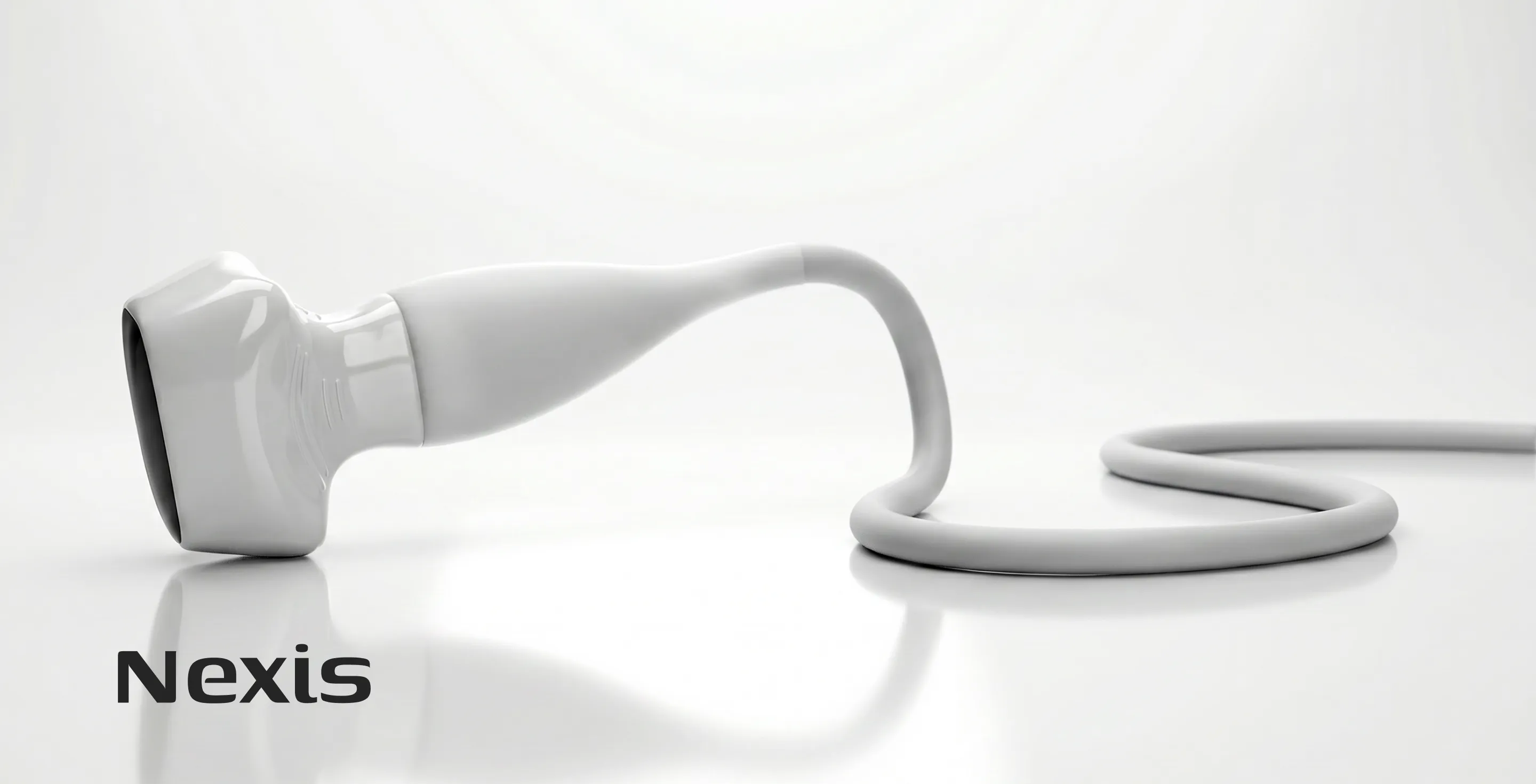
Design a product to ergonomically fit the human body
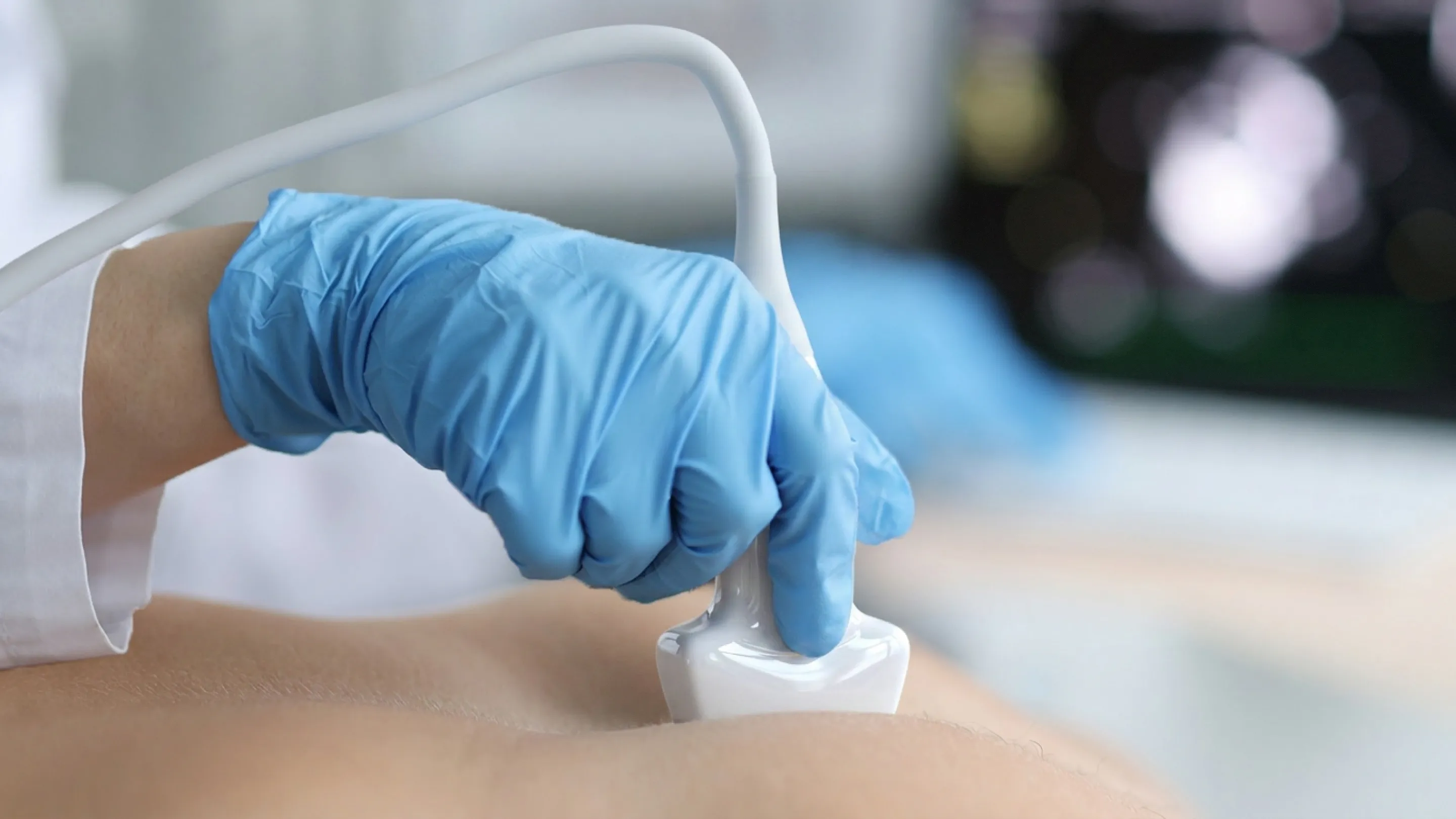
Injury rates compiled from questionnaires suggest that work-related musculoskeletal disorders (WRMSDs) affect between 65% (Schoenfeld et al., 1999) and 91% (Muir et al., 2004, Russo et al., 2002) of ultrasound technicians.
This is a known issue studied since 1985 , and yet is still a prevalent issue in ultrasound technicians today, with echocardiograms being notoriously the most physically demanding
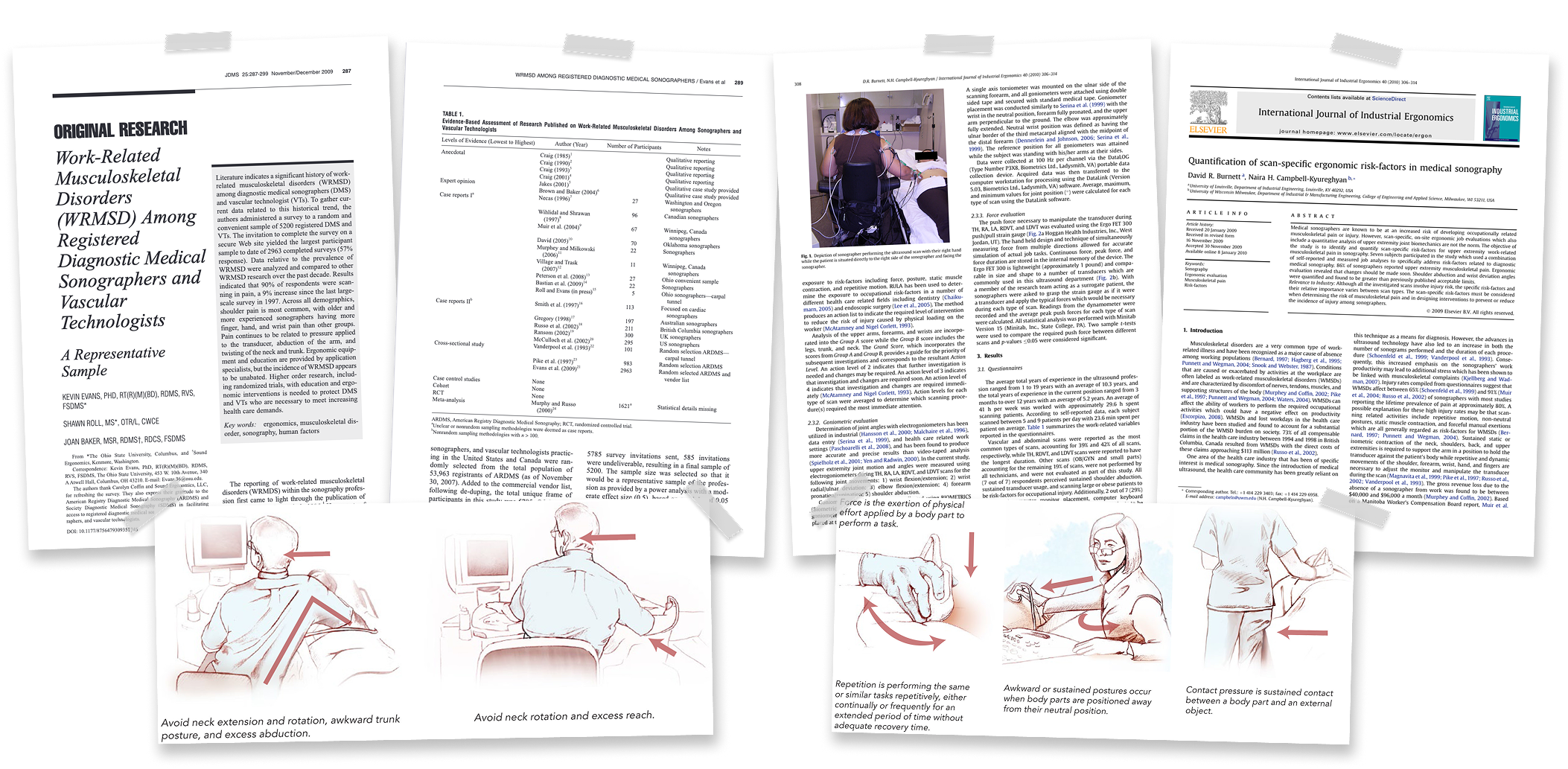
Initial research showed a focus on avoiding excess rotation, extension, and finger strain, particularly by utilizing the Power Grip.

I brought my 3D printed round 1 and 2 prototypes to the Gwinnett Tecnhical College ultrasound department to get real world testing from actual practicing students and professionals.
Despite being taught the standard recommendations for ergonomics, no student or professional actually followed the guidelines.
By having multiple echocardiogram exams performed on myself and being walked through how to perform an exam, I found that the ergonomic guidelines, including arm placement and the power grip did not allow for the dexterity, precision, and intense forces necessary to get clean ultrasound images in an echocardiogram exam.

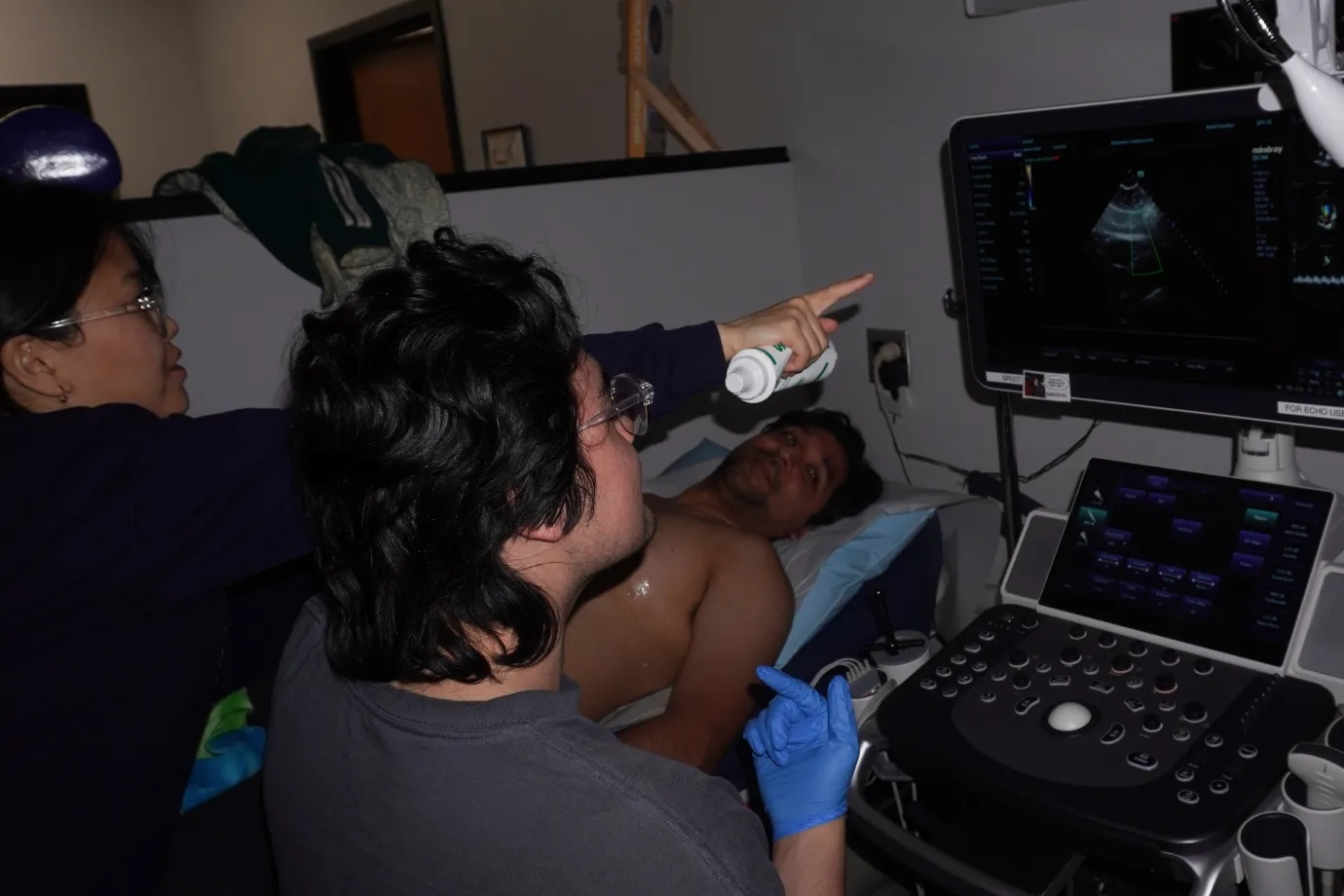
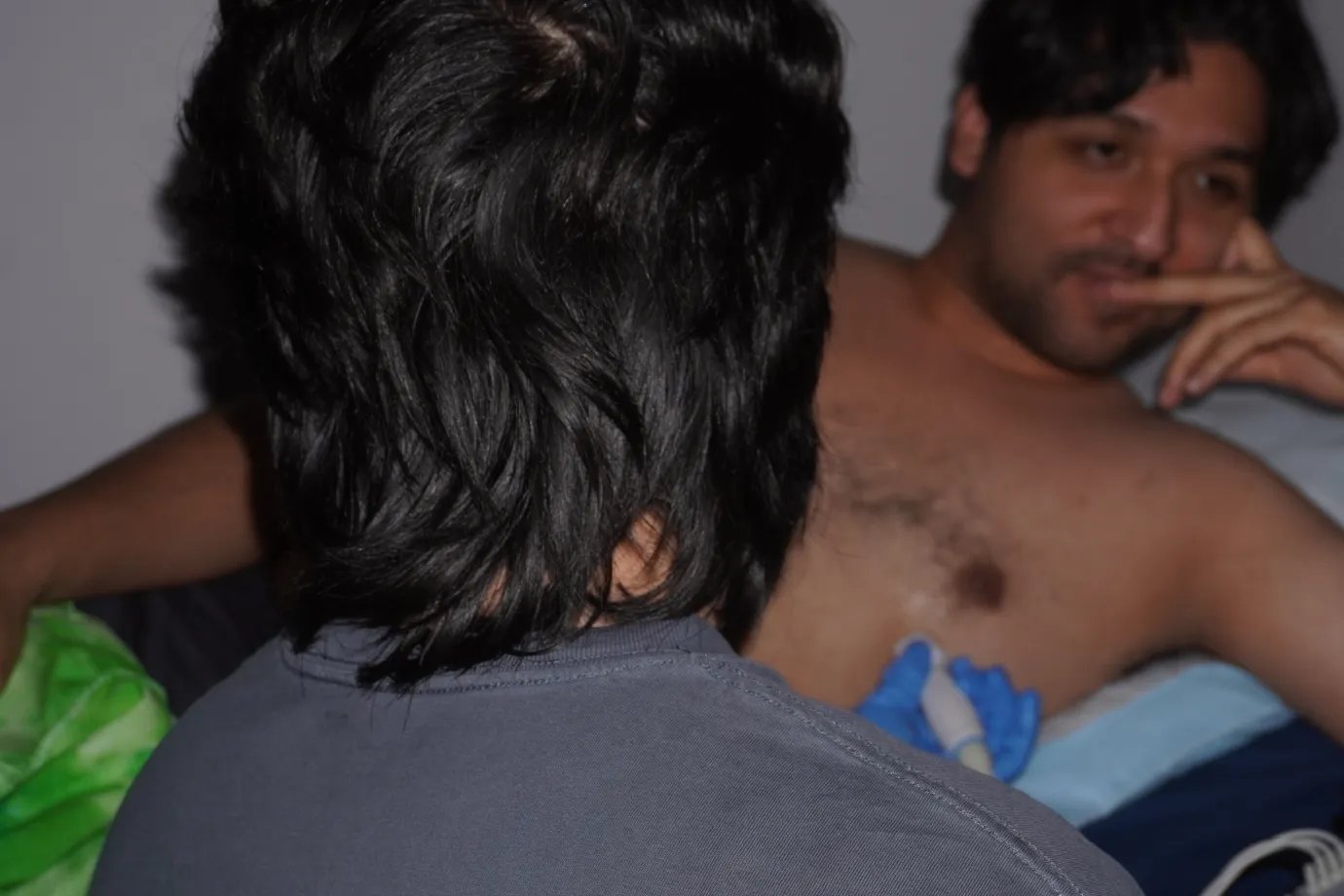
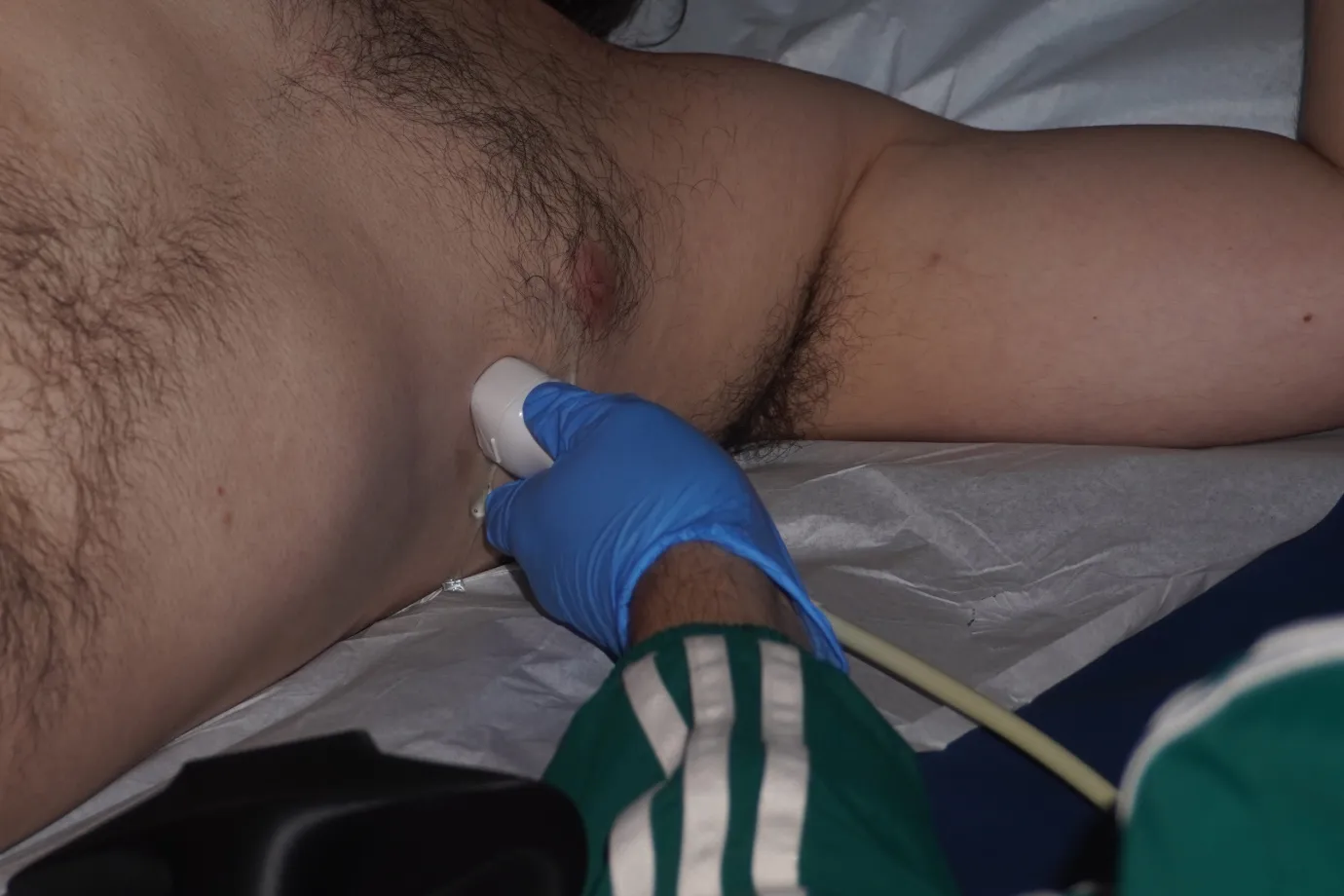
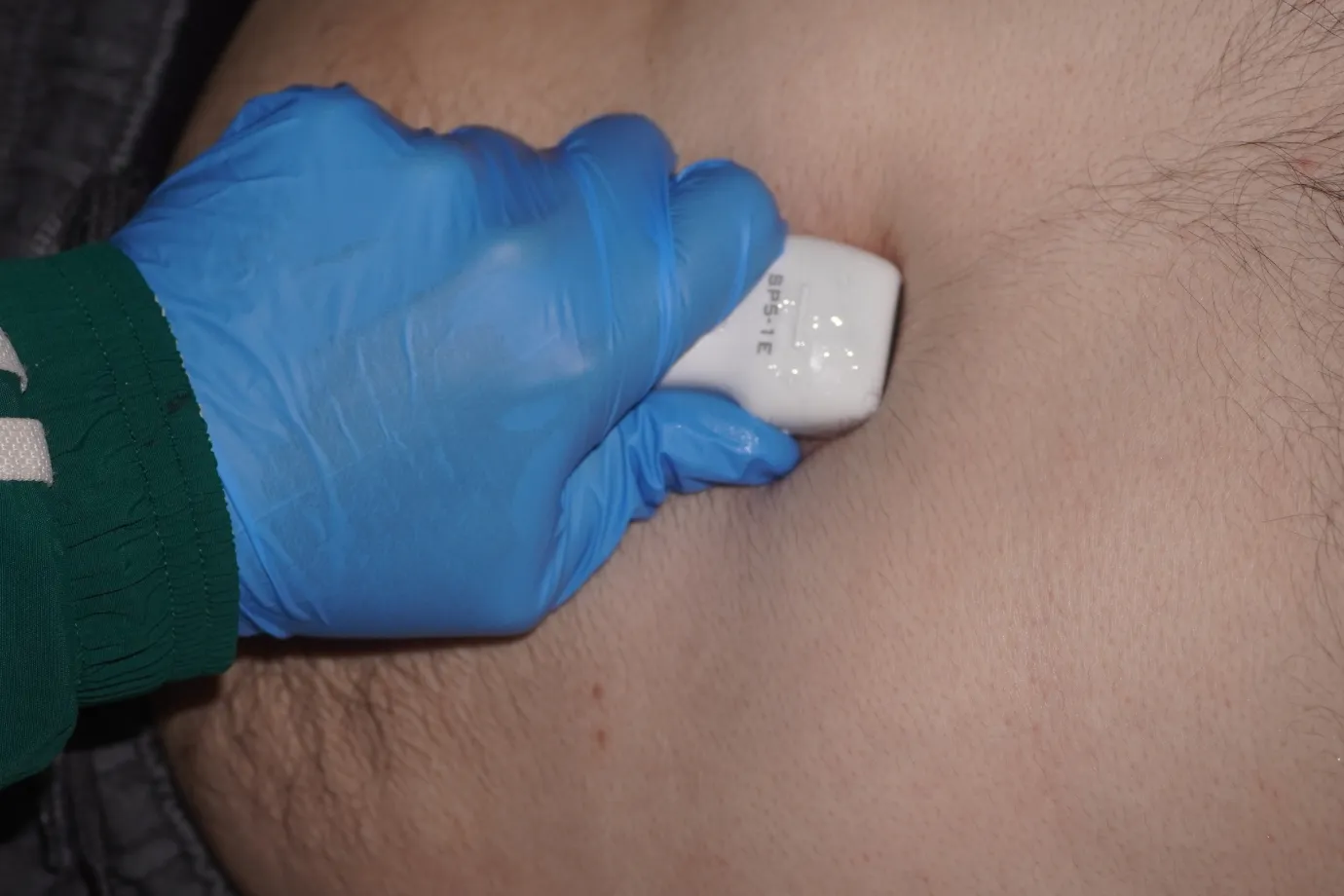
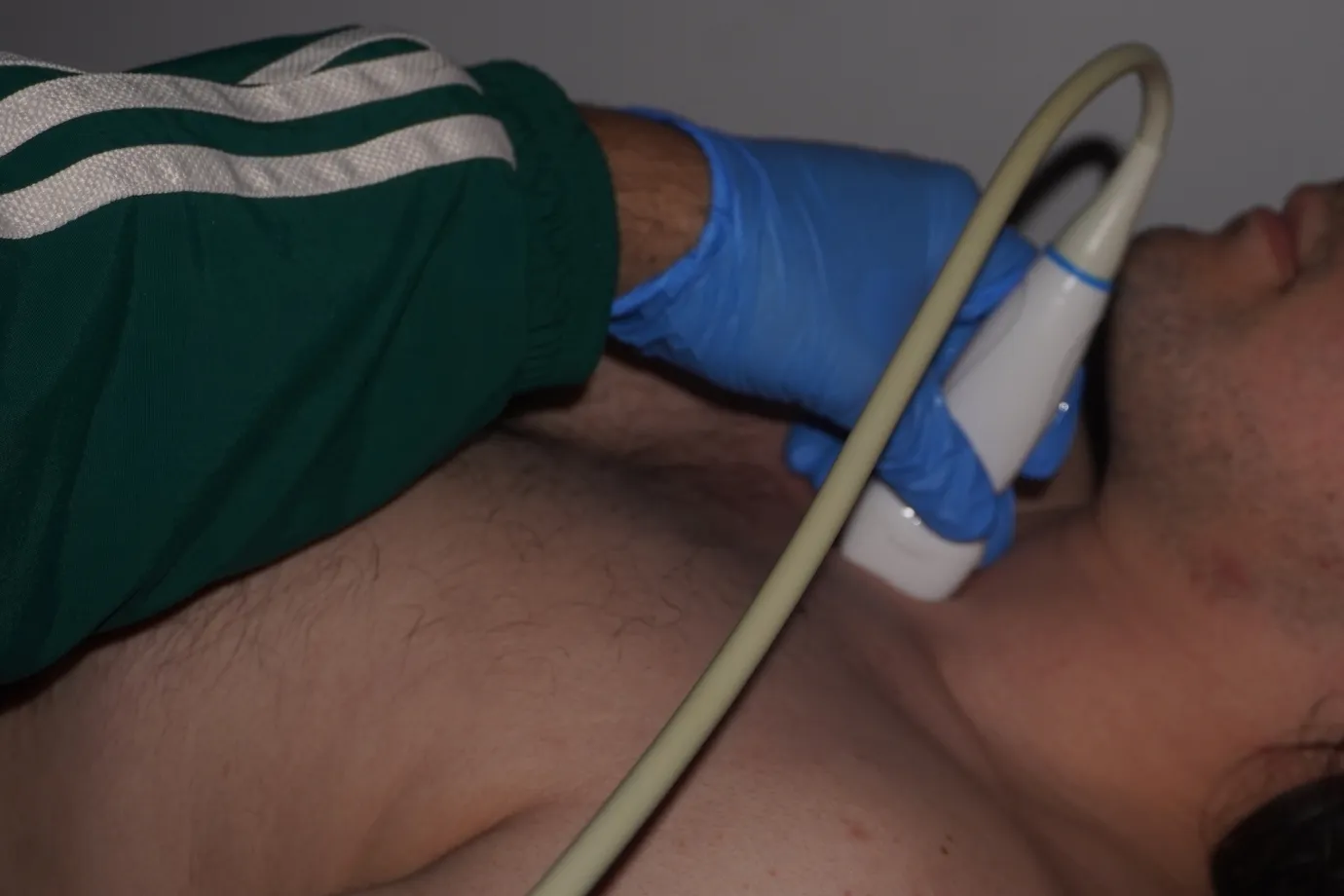
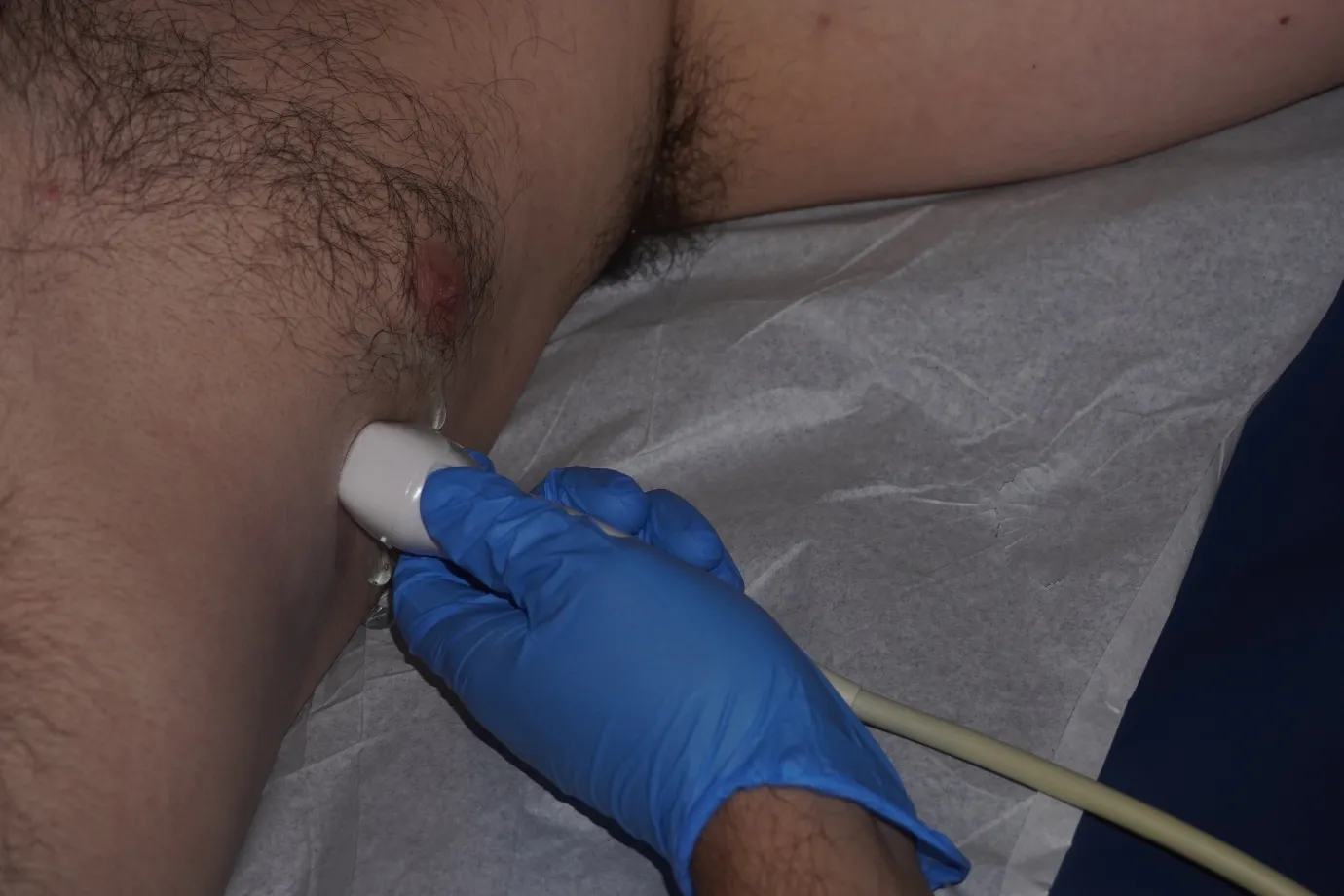
After having the ultrasound technicians test my prototypes intuitively and with their trained grip positions, I formed 3 key insights:
- Optimization for a single ergonomic hand position is impossible
- High manipulation ability is necessary
- Users must hold a large pushing force constantly while making minute adjustments
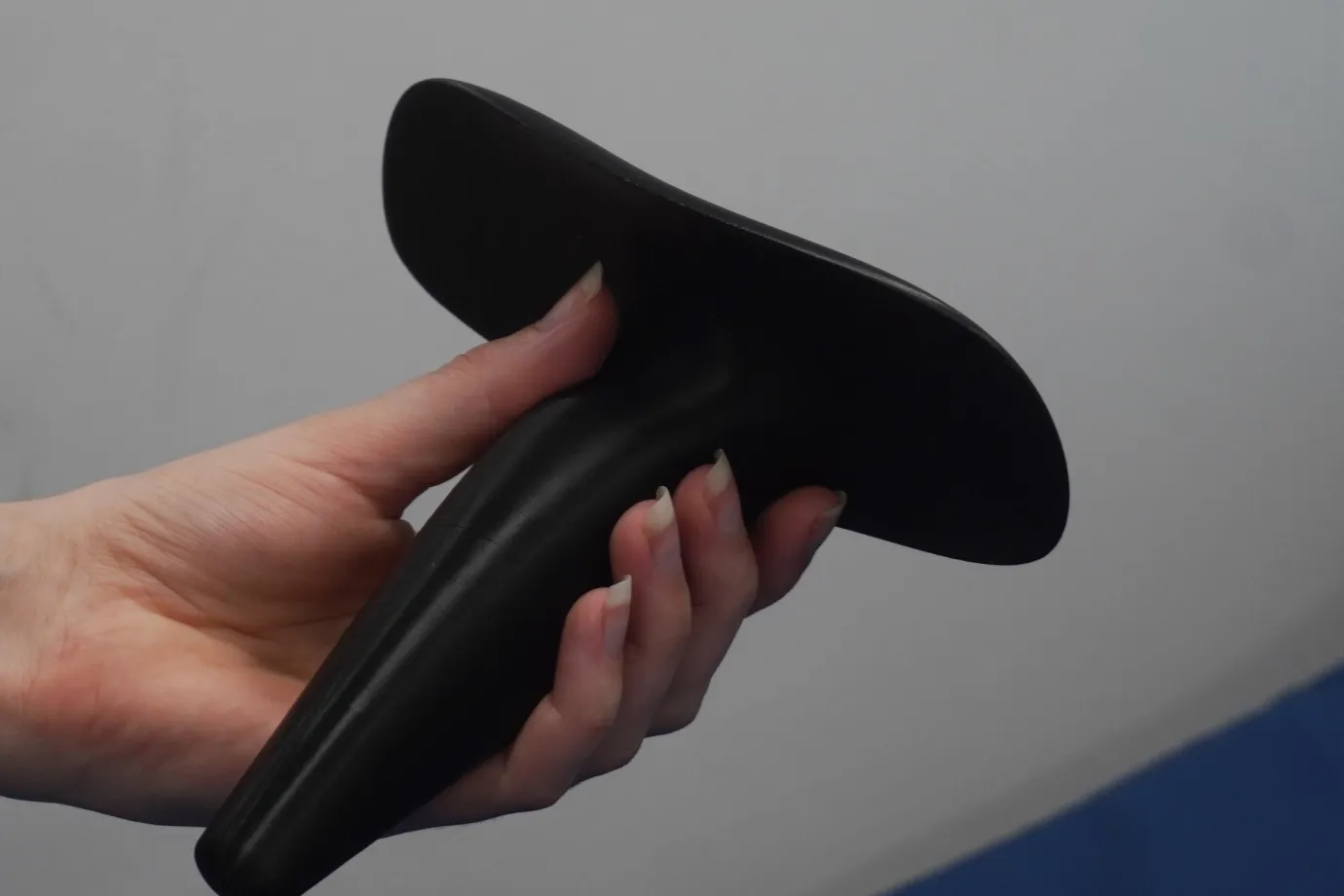
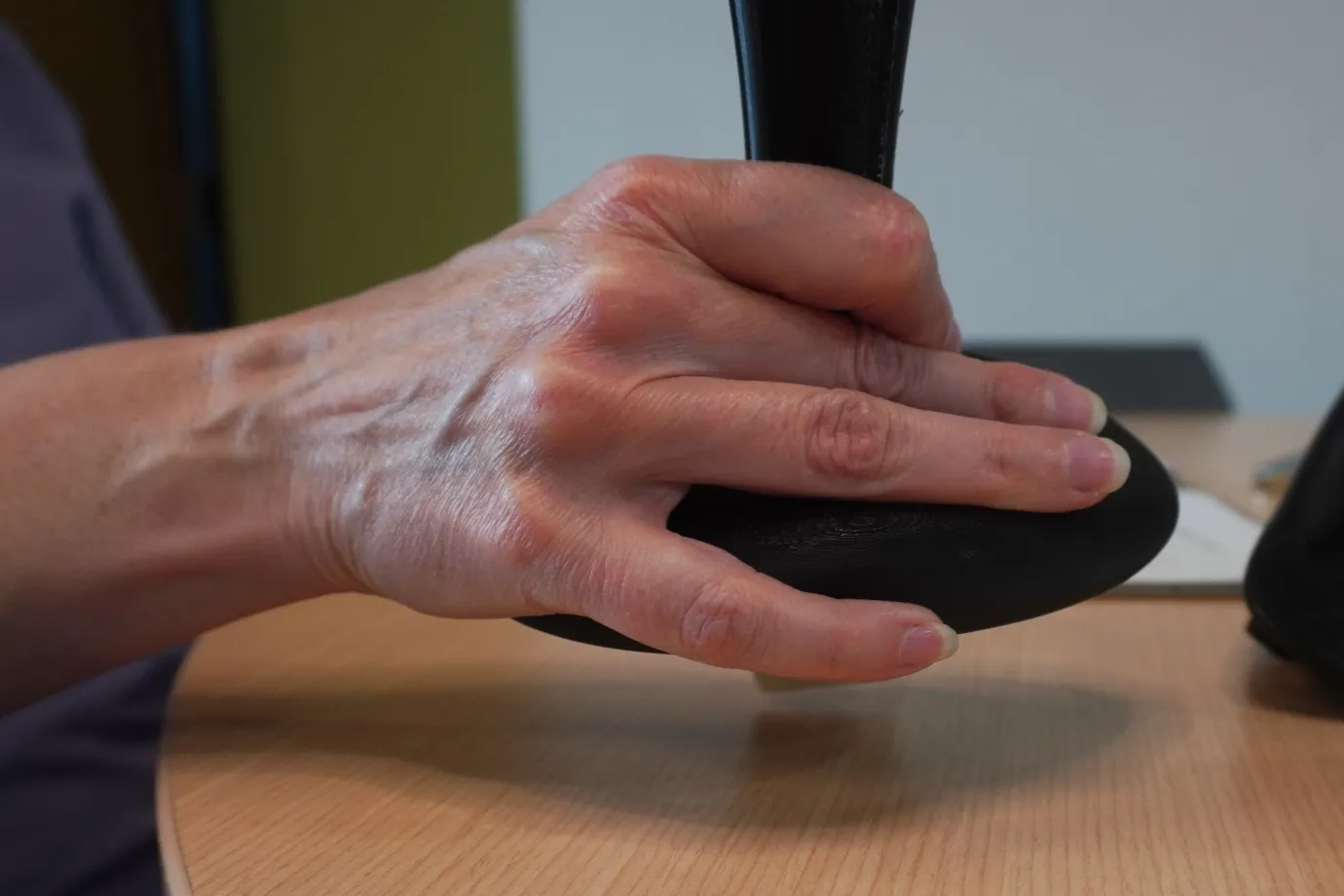
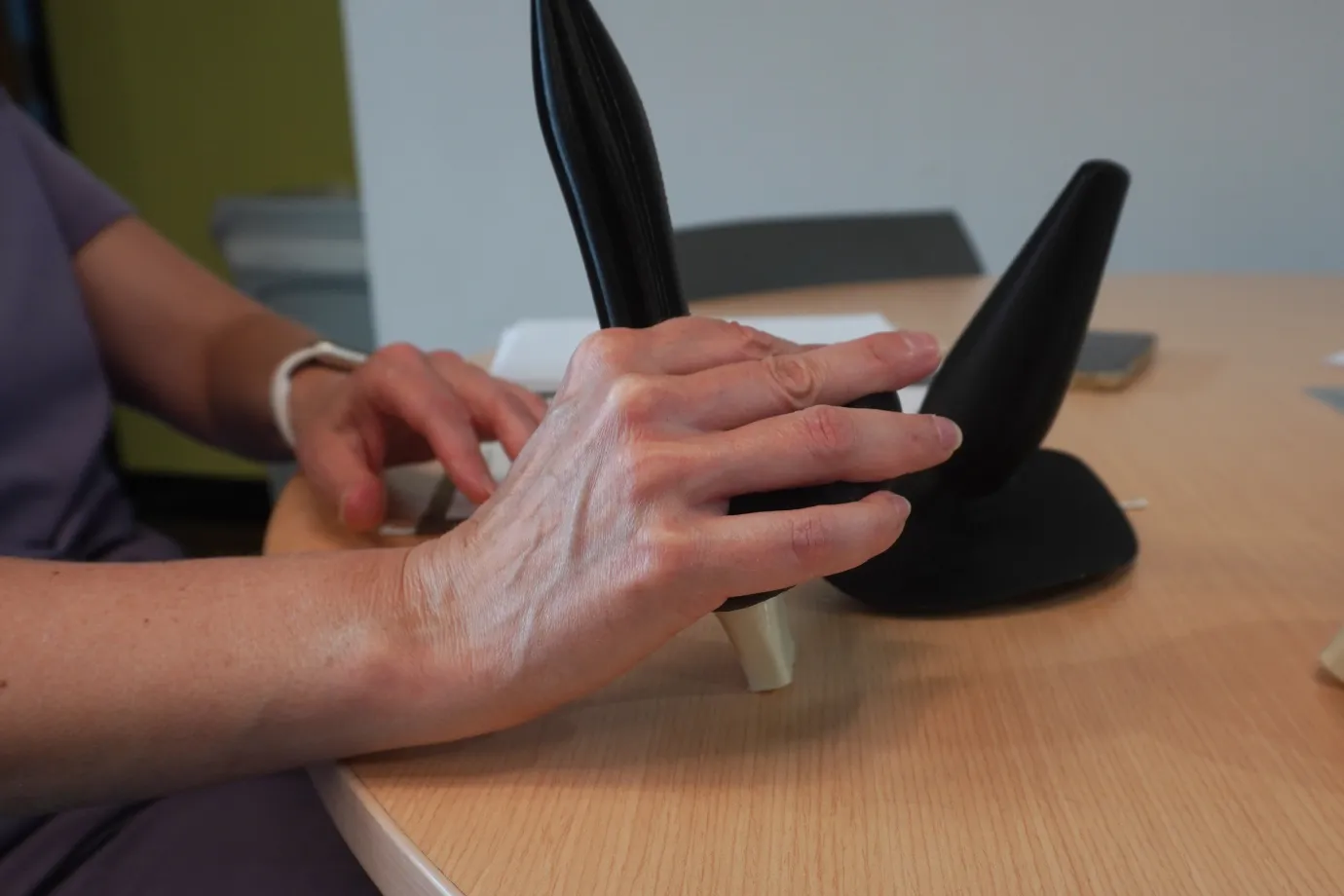
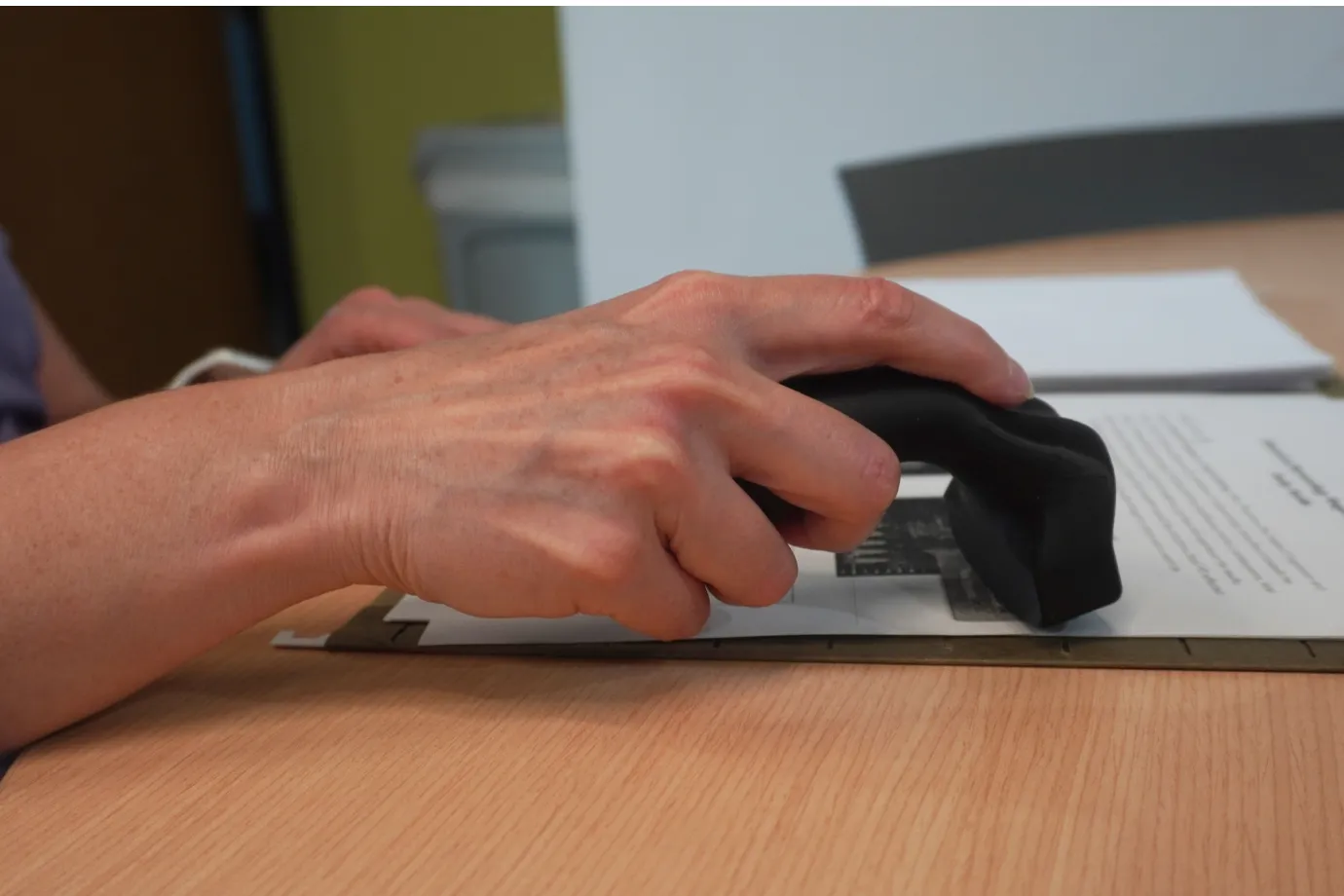
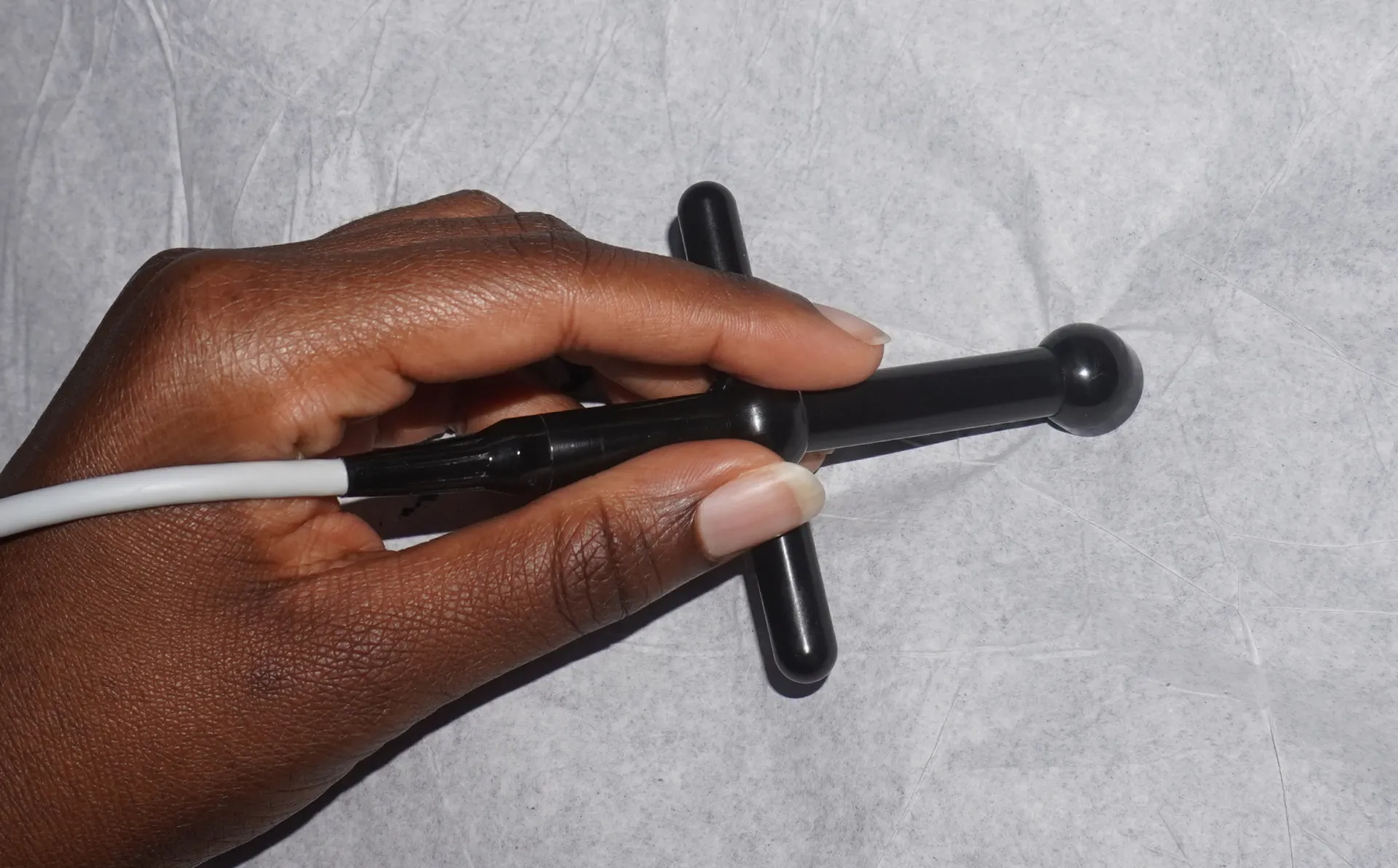
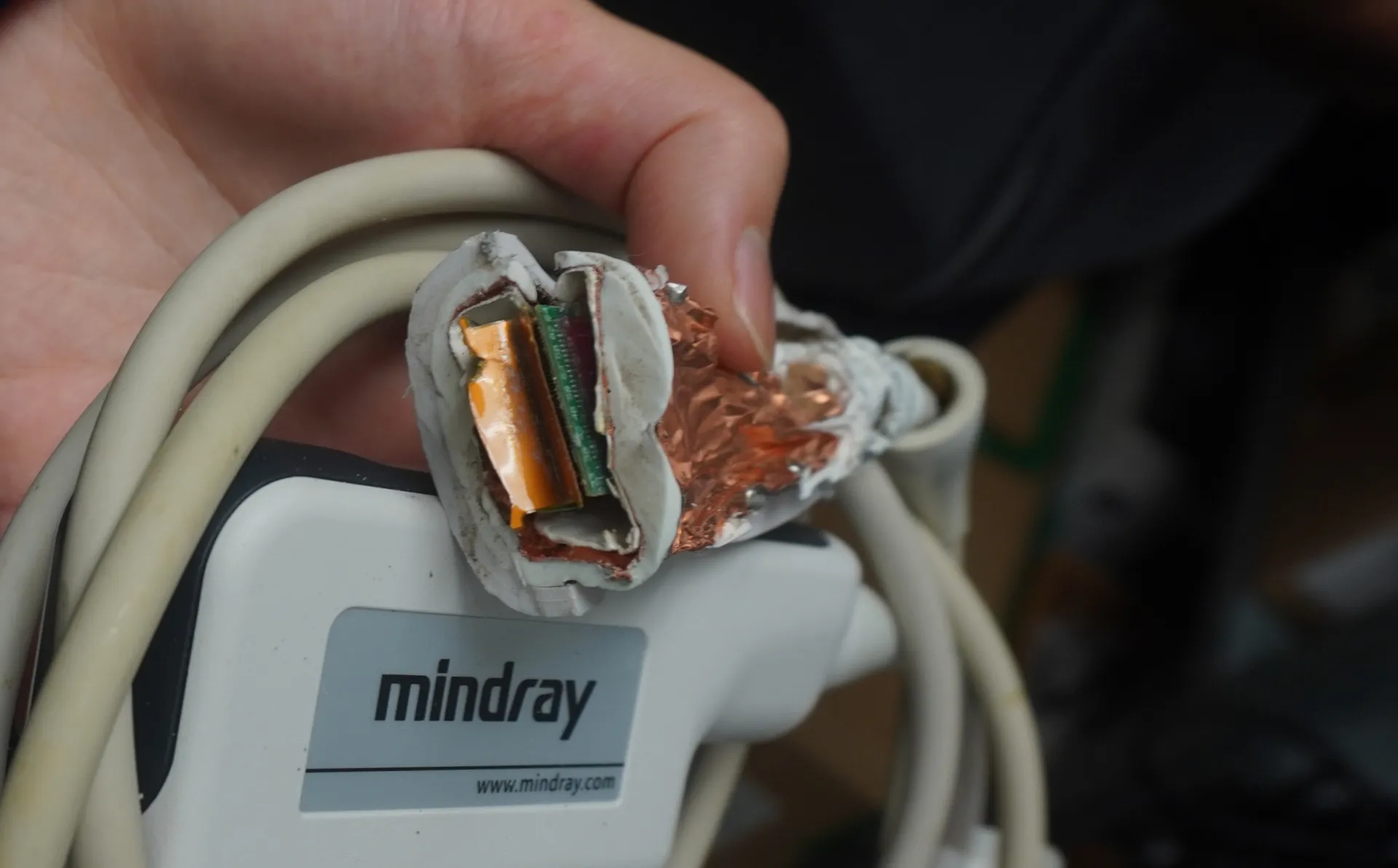
Students showed me other medical tools that had better ergonomics and the inner components of a transducer so I could design within the limits of the technology
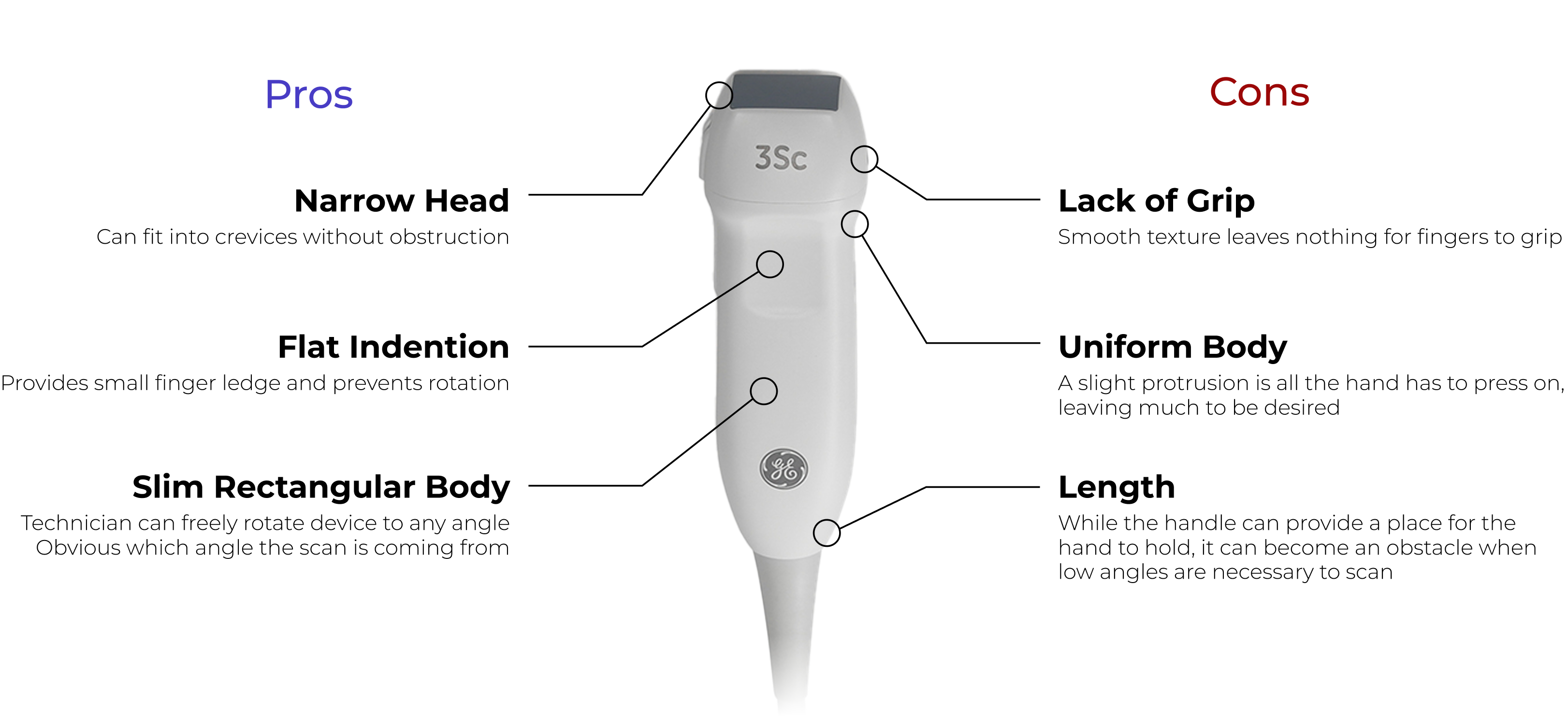
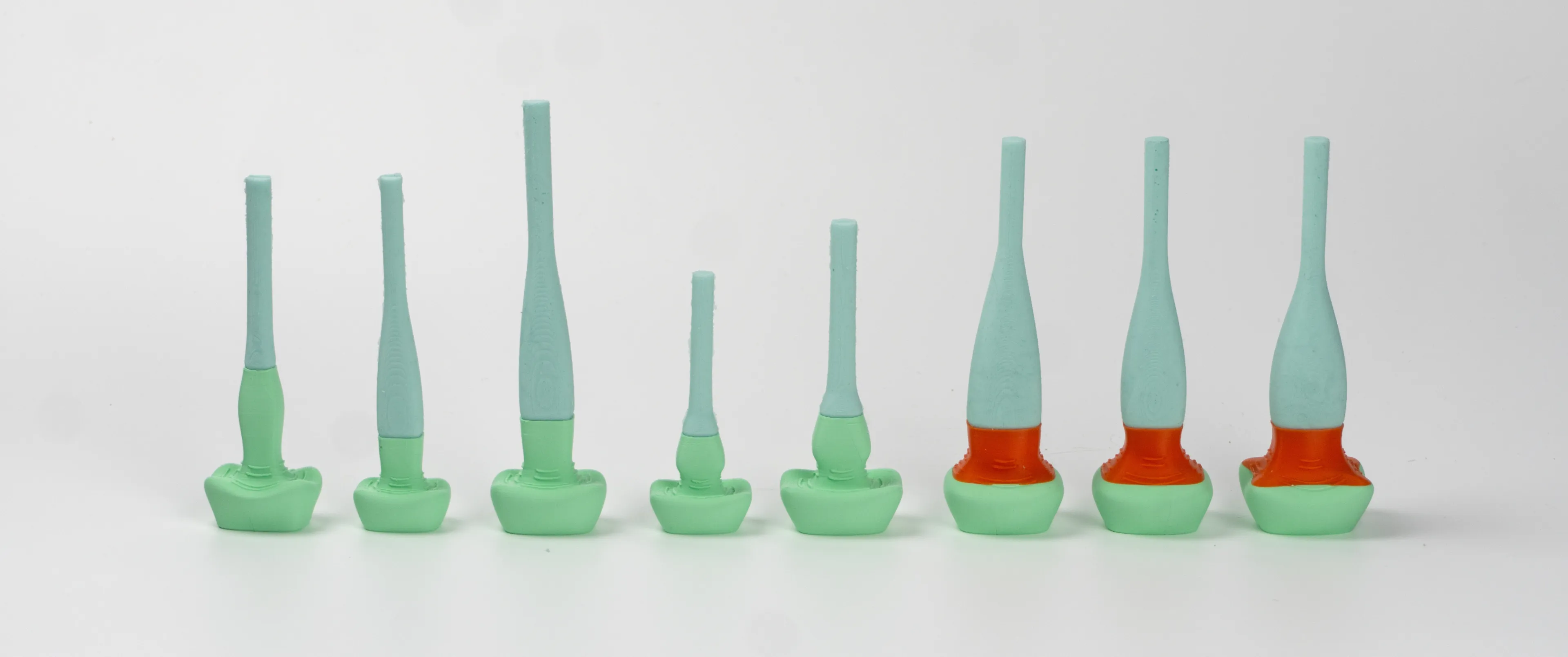
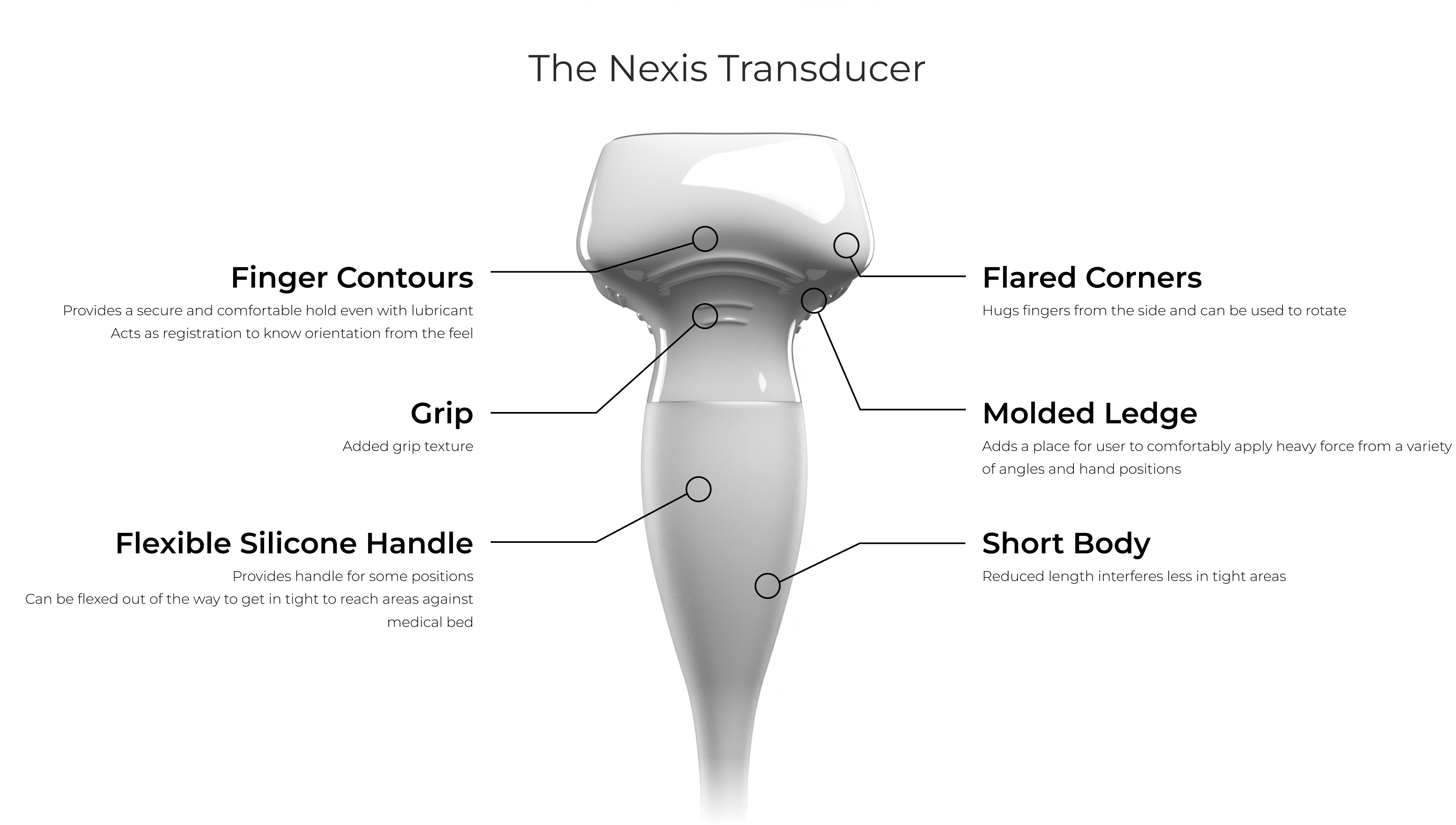
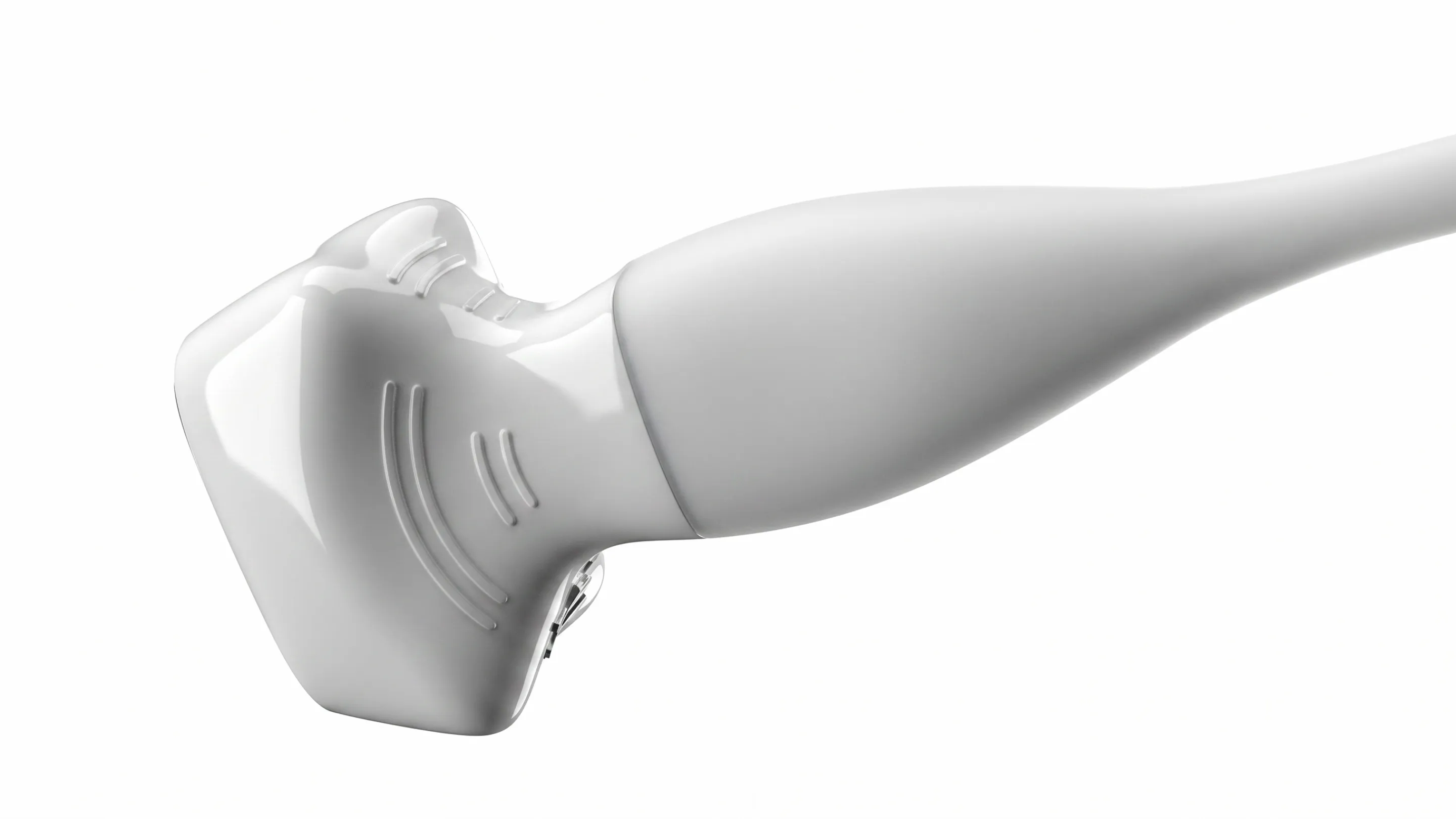
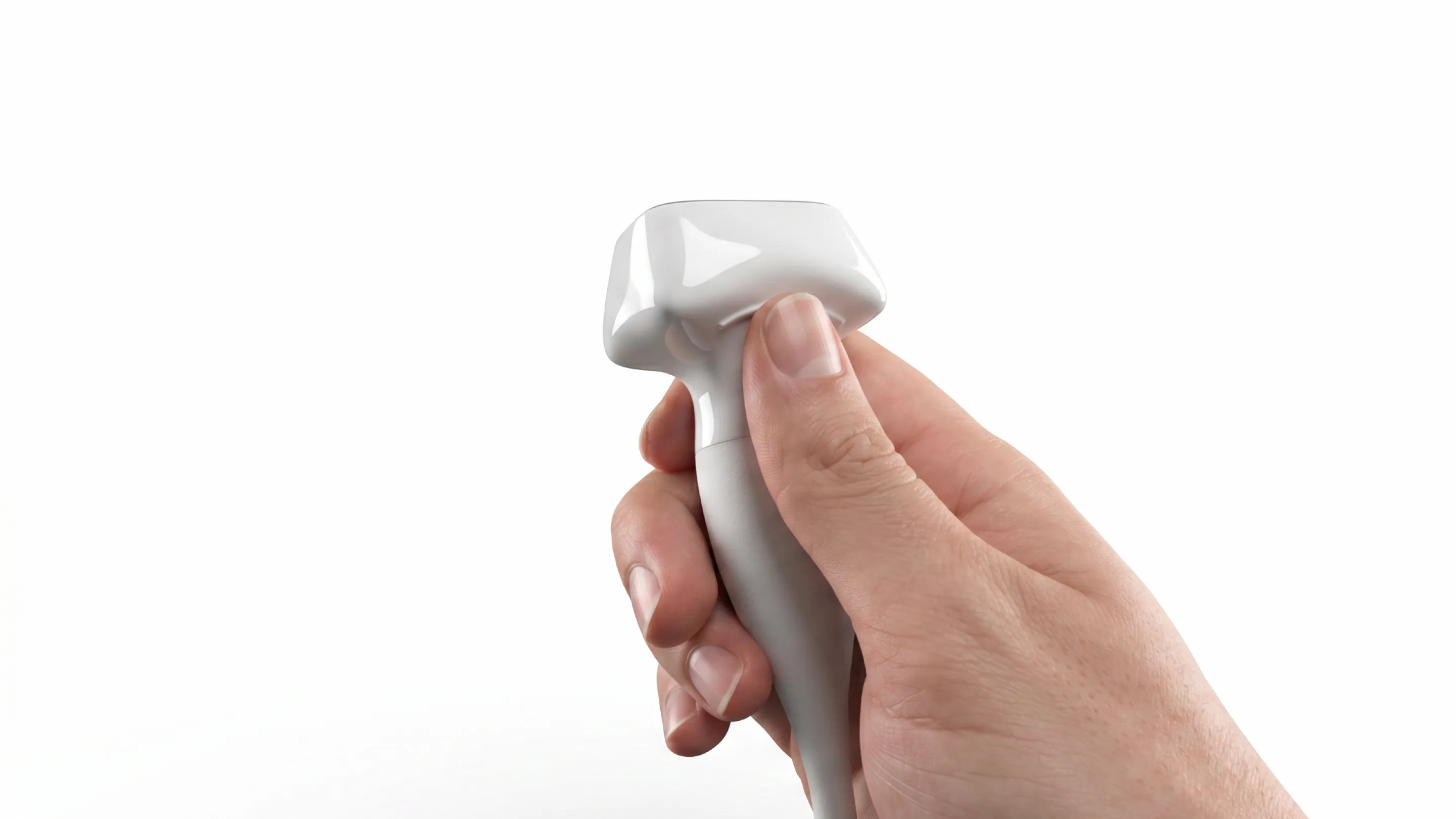
Based on feedback and analysis of current transducers, I modeled, printed, and molded 8 new prototypes with various proportions. These prototypes all had cast silicone grips for enhanced flexibility in the crevices of the hand.
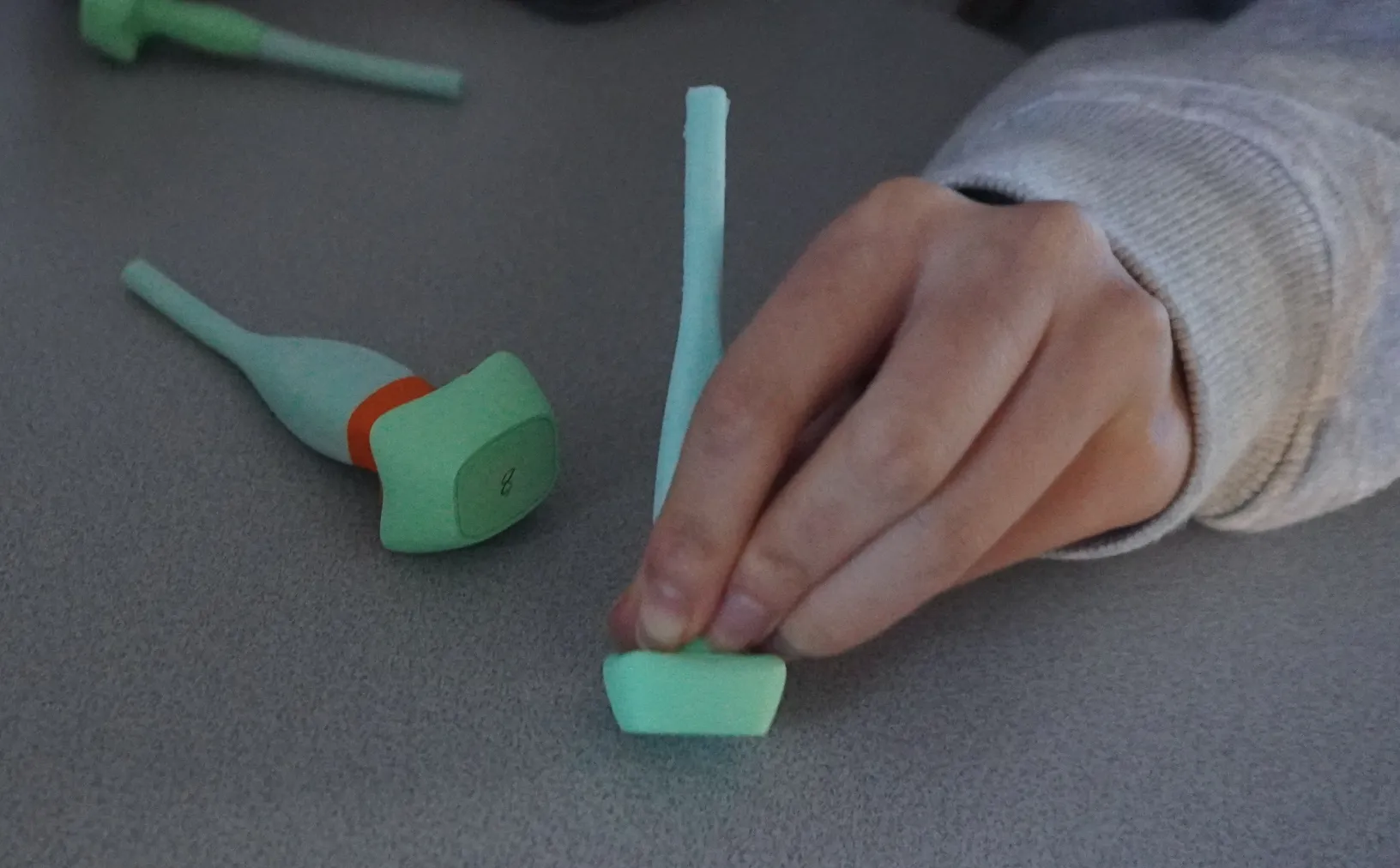
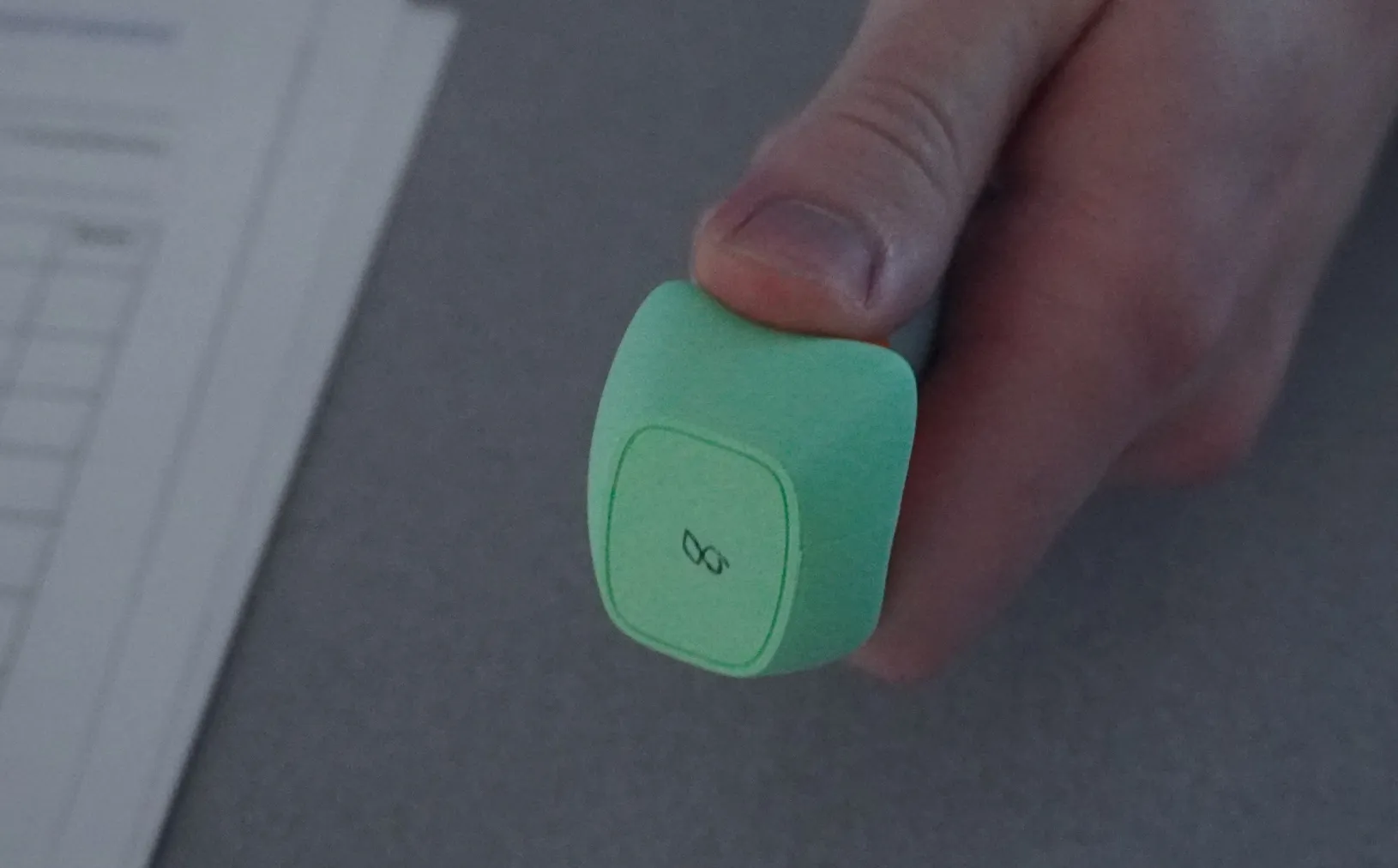
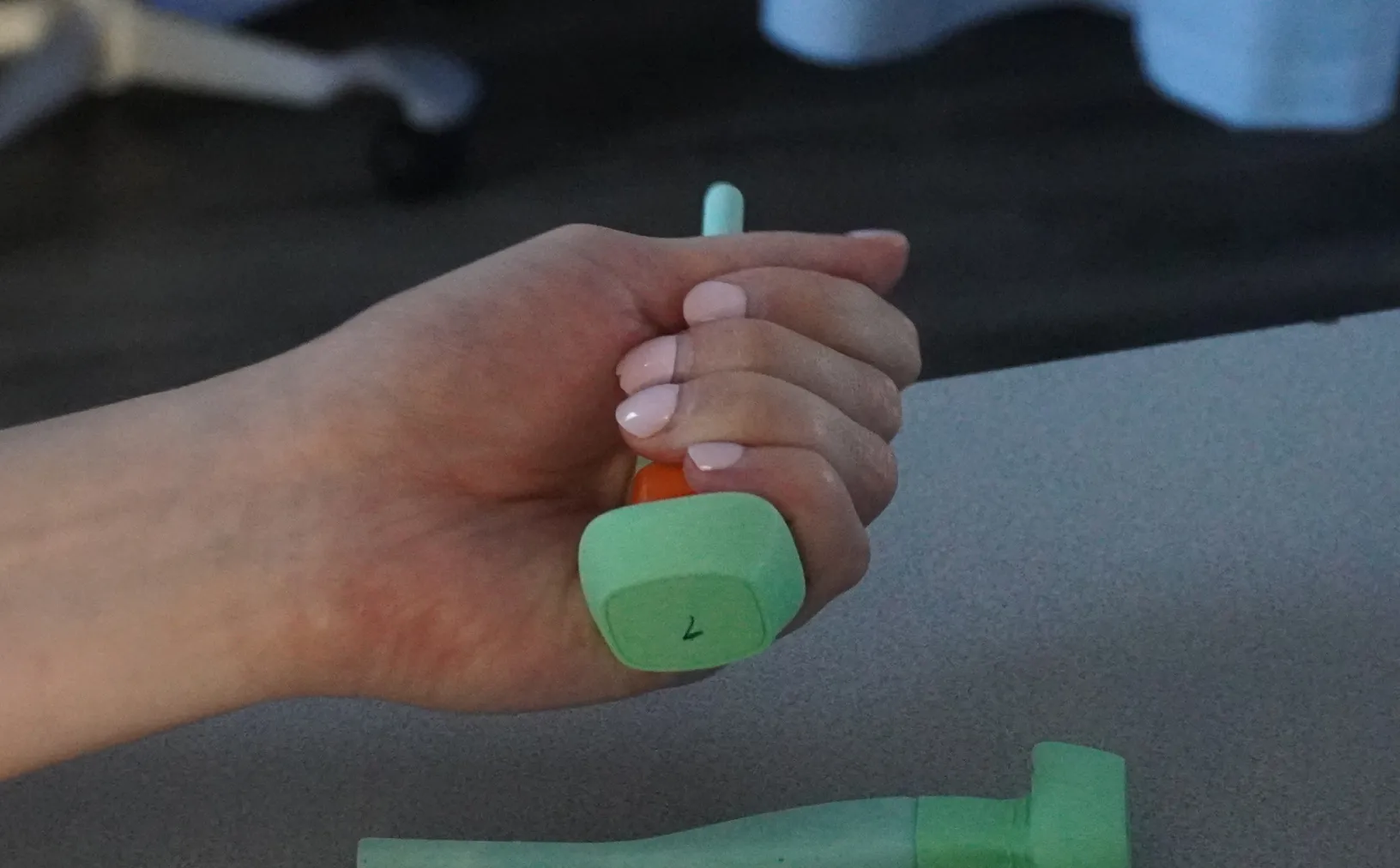
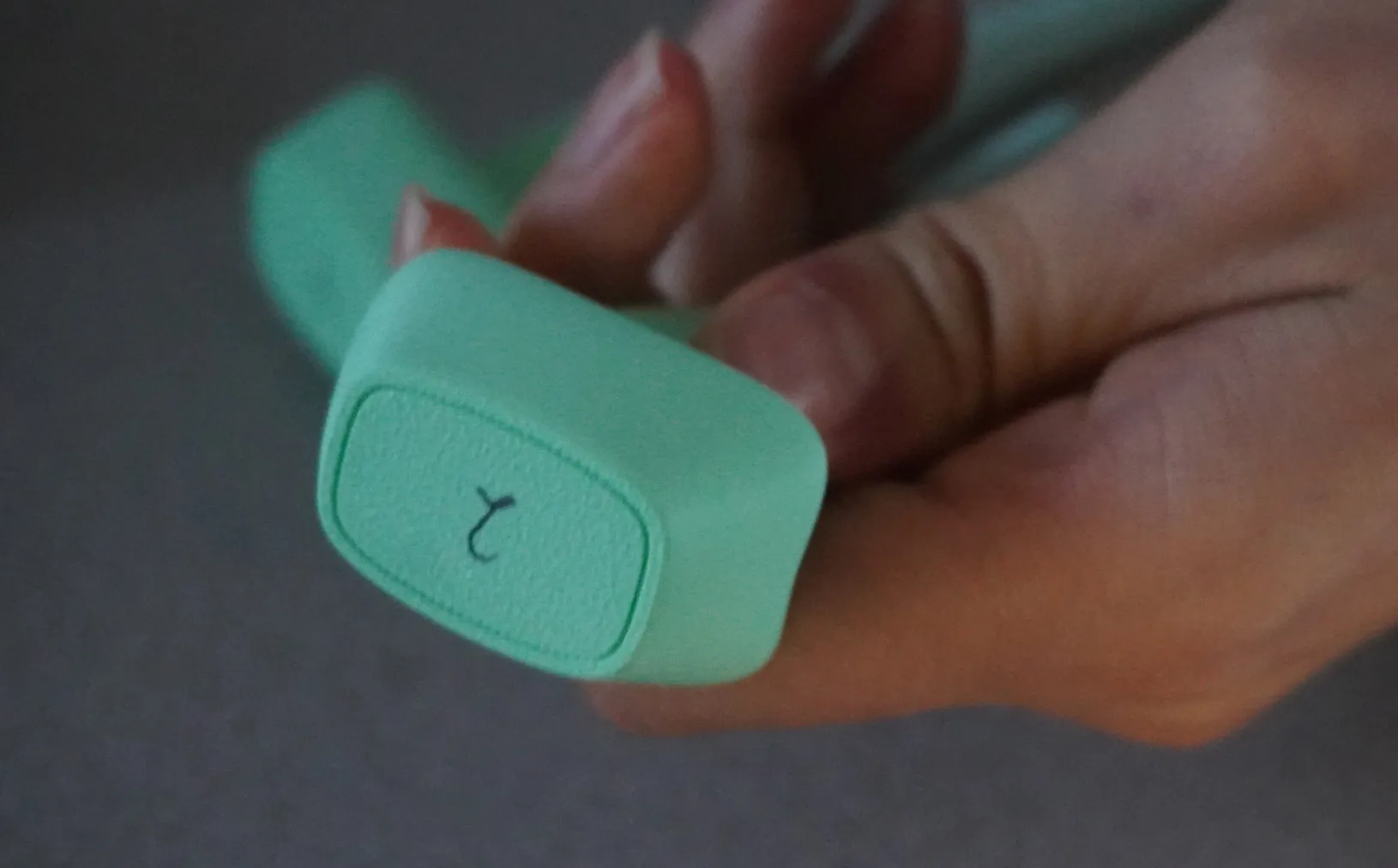
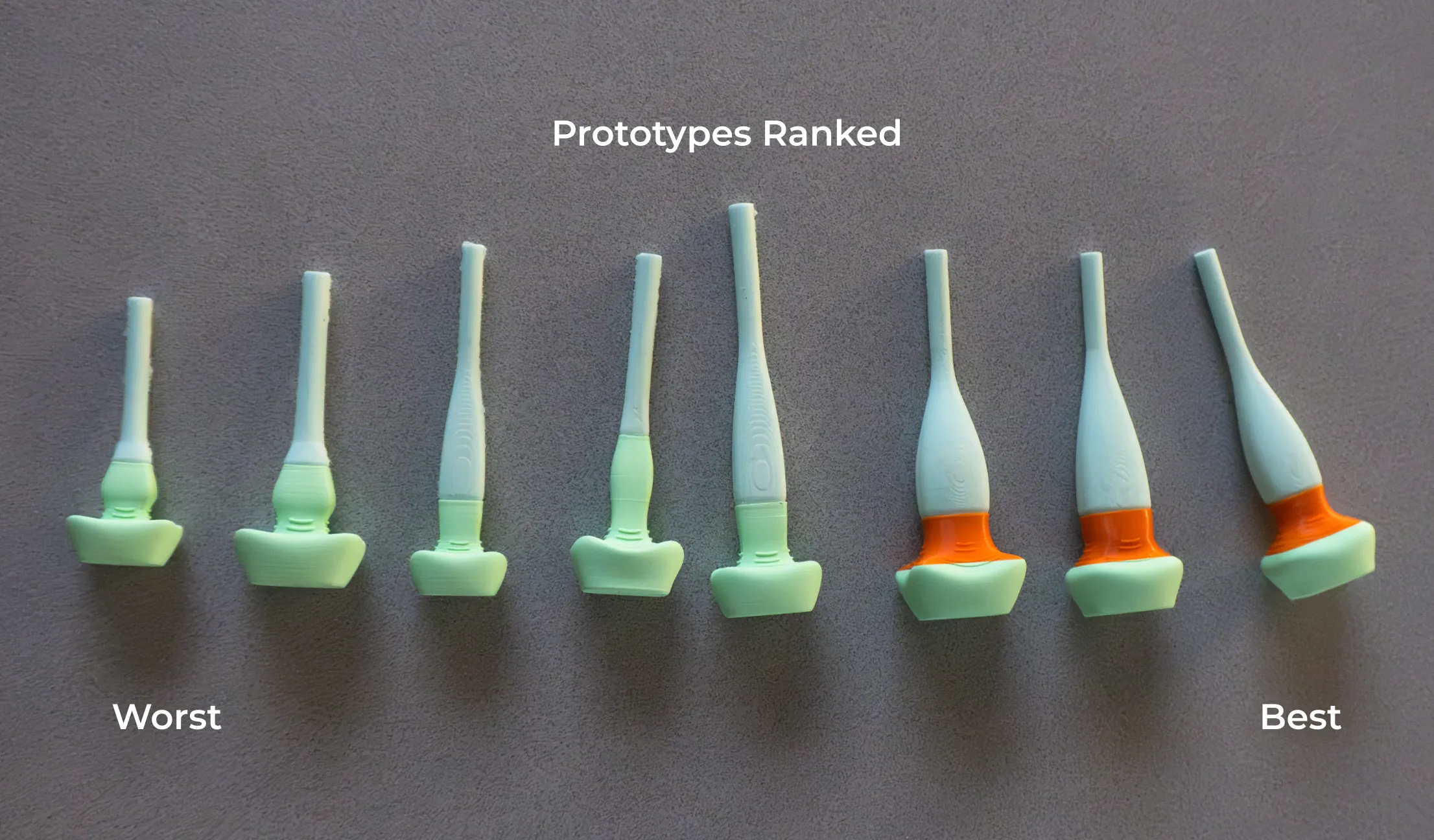
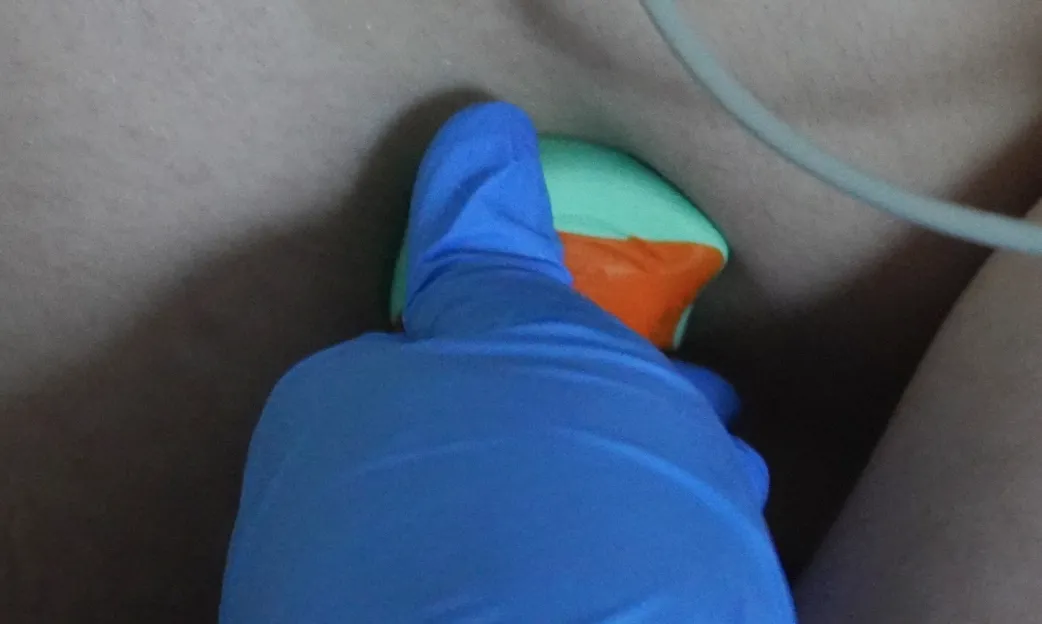
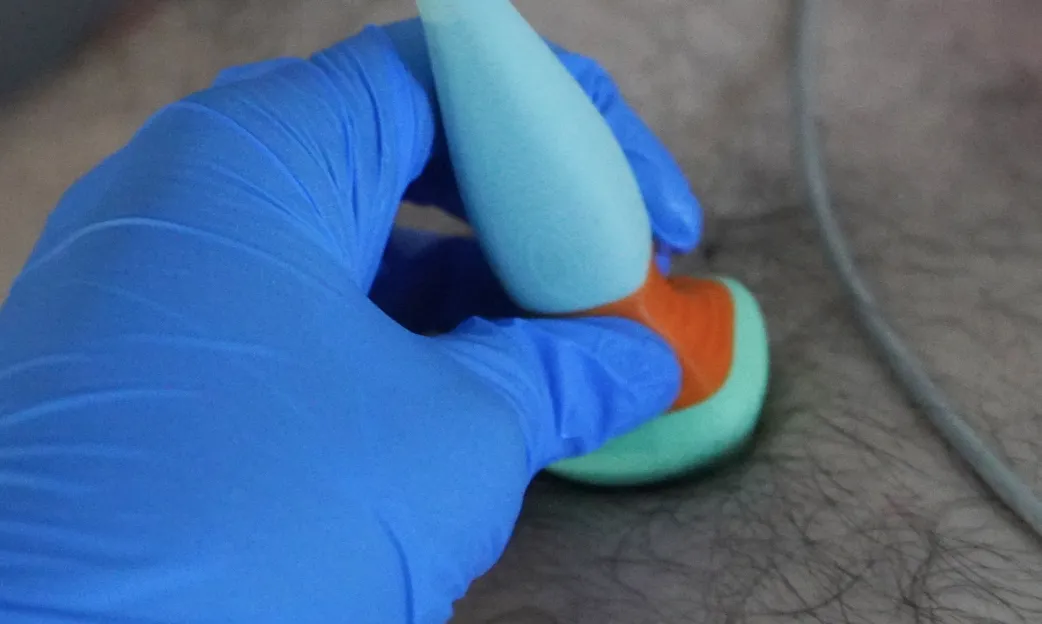
The new designs gave the technicians improved ability to apply pressure and improved ease of manipulation of the transducer. Specifically conforming to the unique grips cardiologists require for their procedures reduced hand and upper body strain.