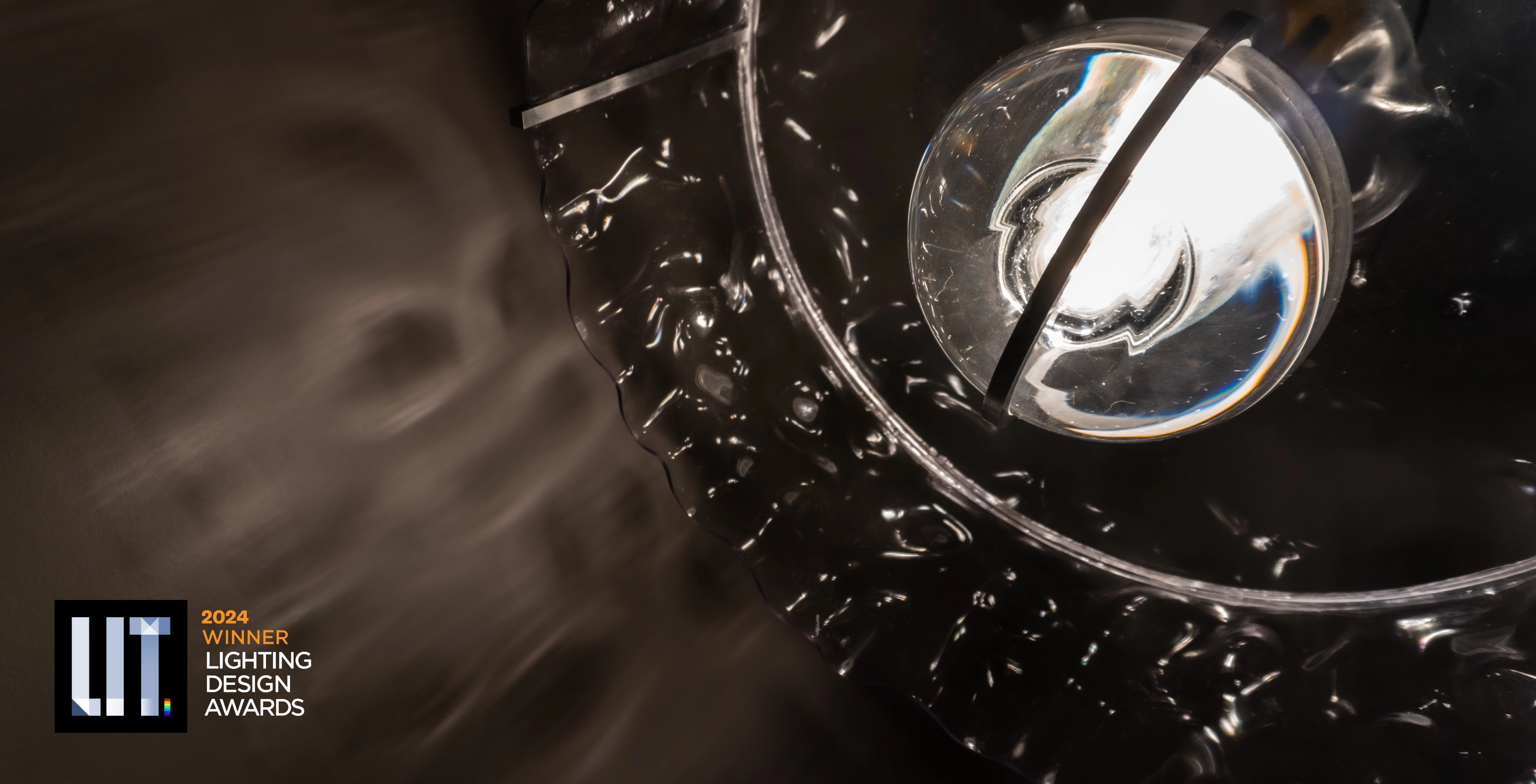
Design a purposeful light
Concept
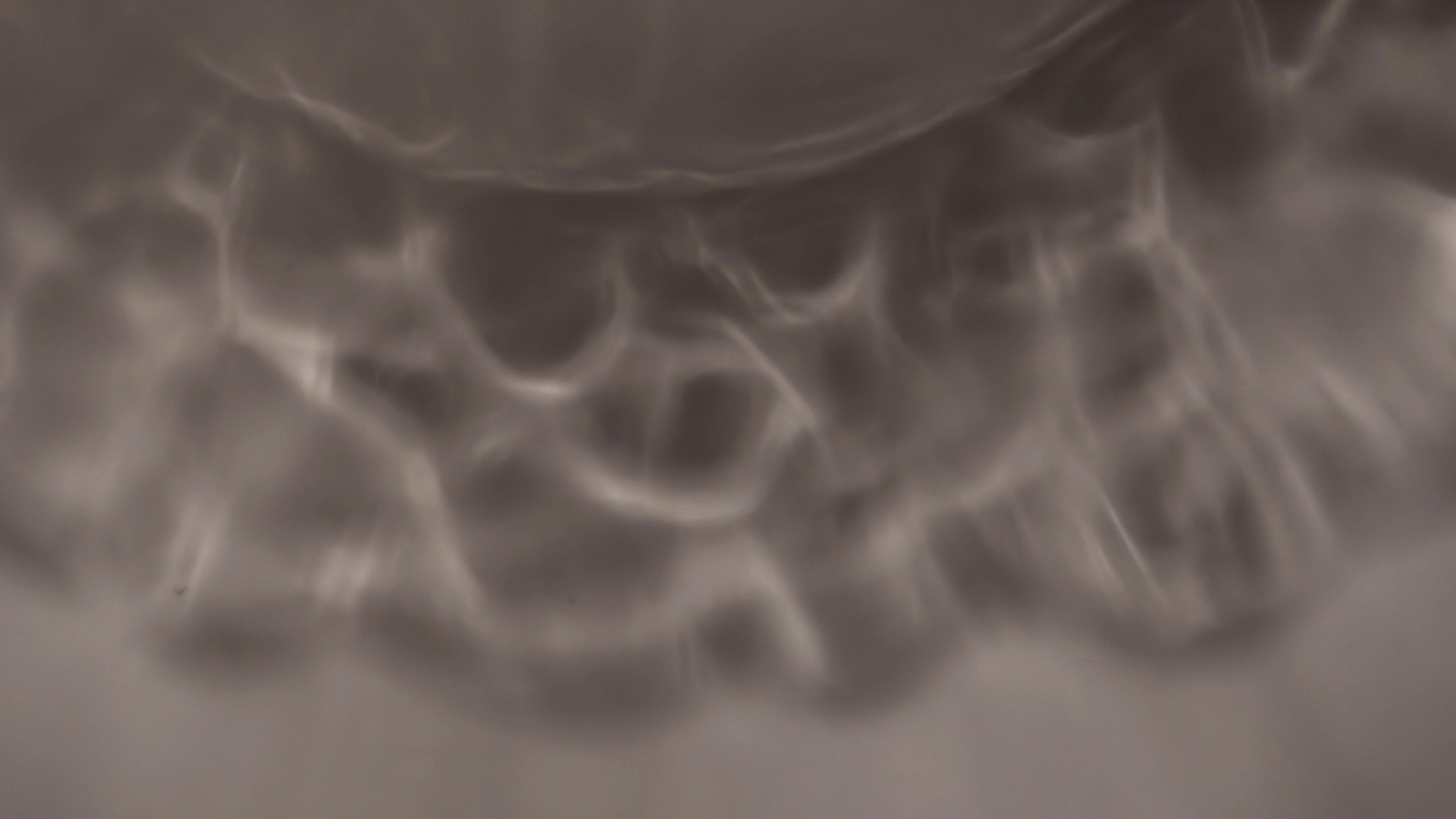
Design a light that utilizes caustics to create an enveloping environment that changes the mood of a room though a meaningful, tactile interaction.
The design should visibly elevate a space and allow for variable lighting options depending on the user’s changing needs.
calm, flowing, movement

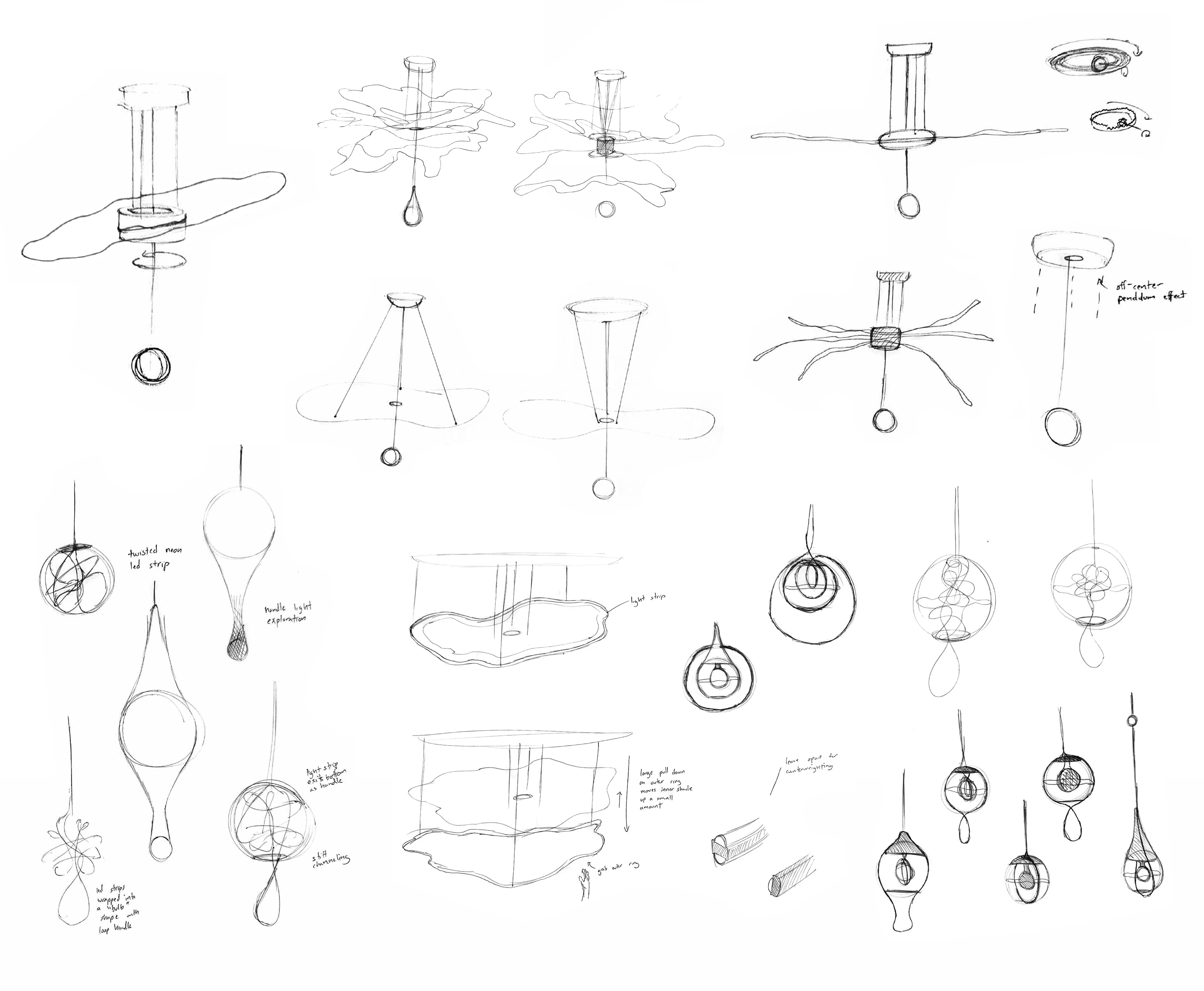
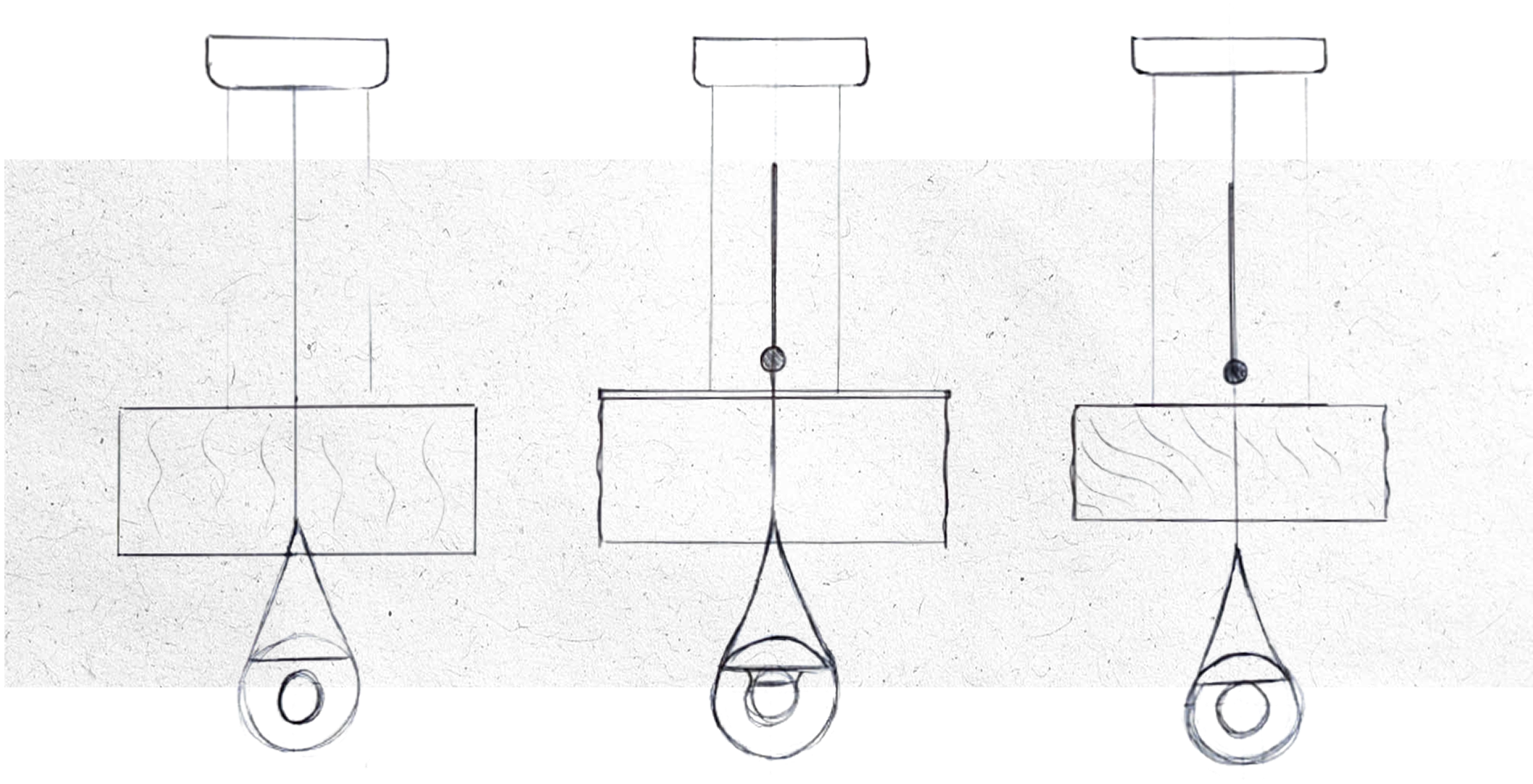
Direction
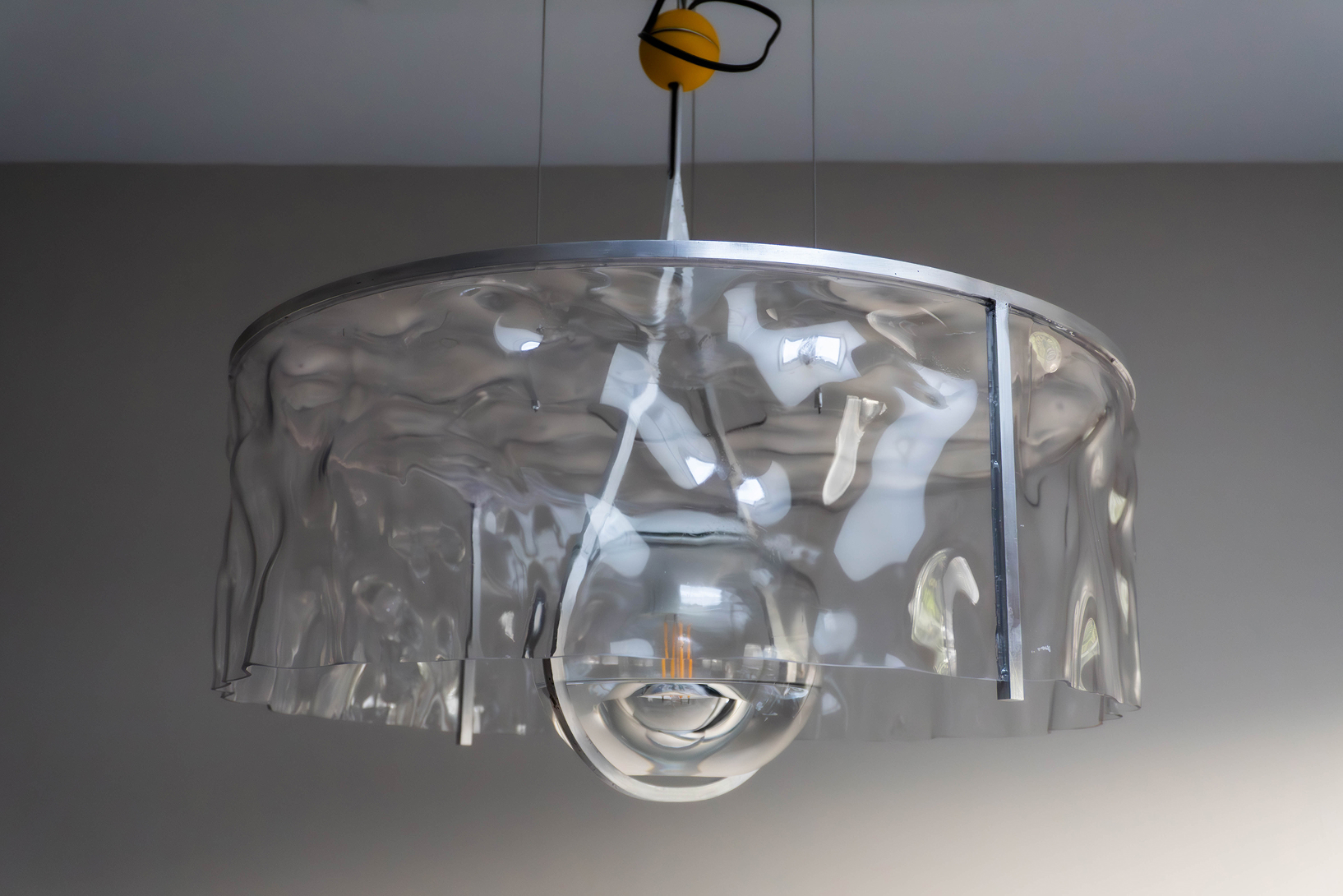
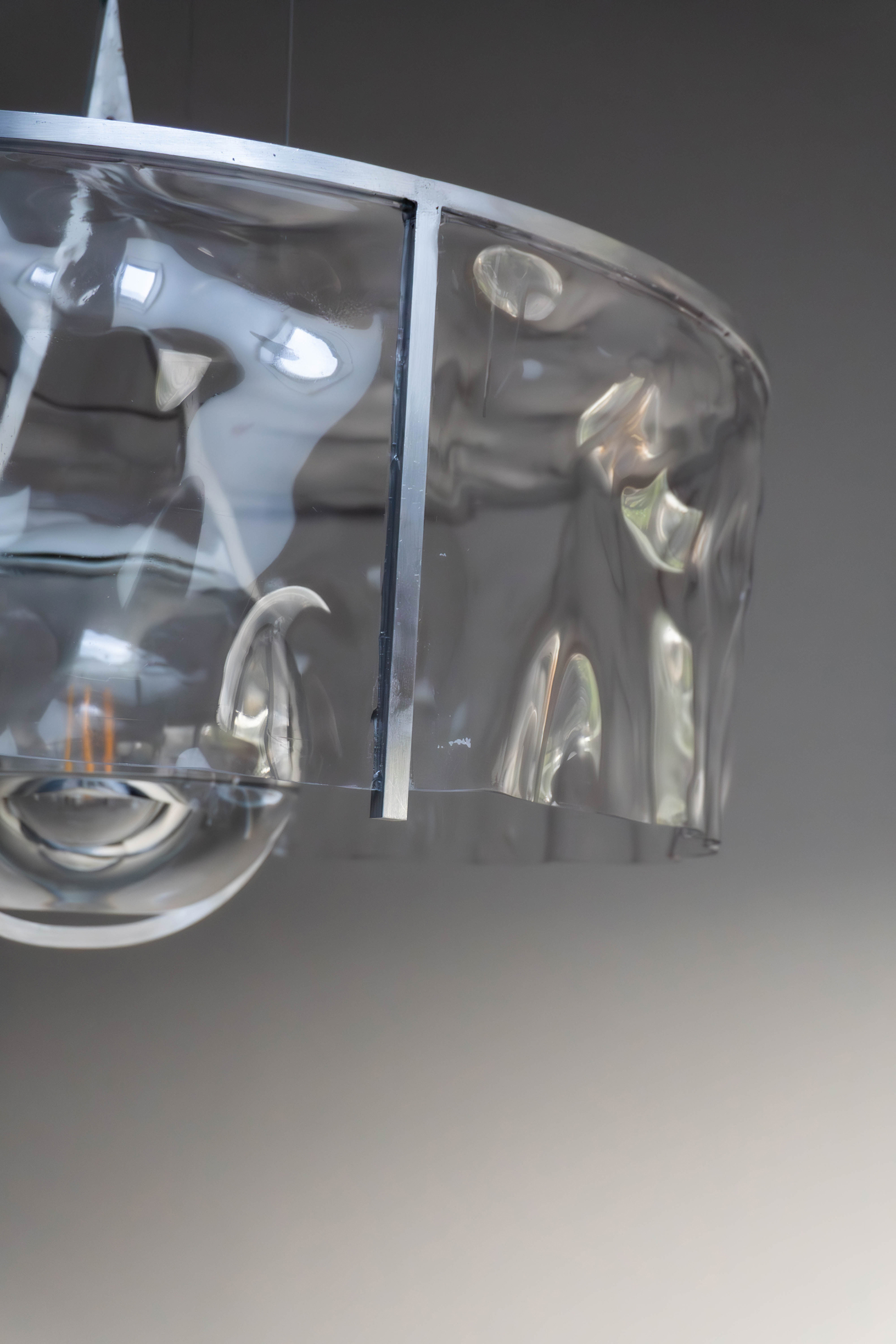
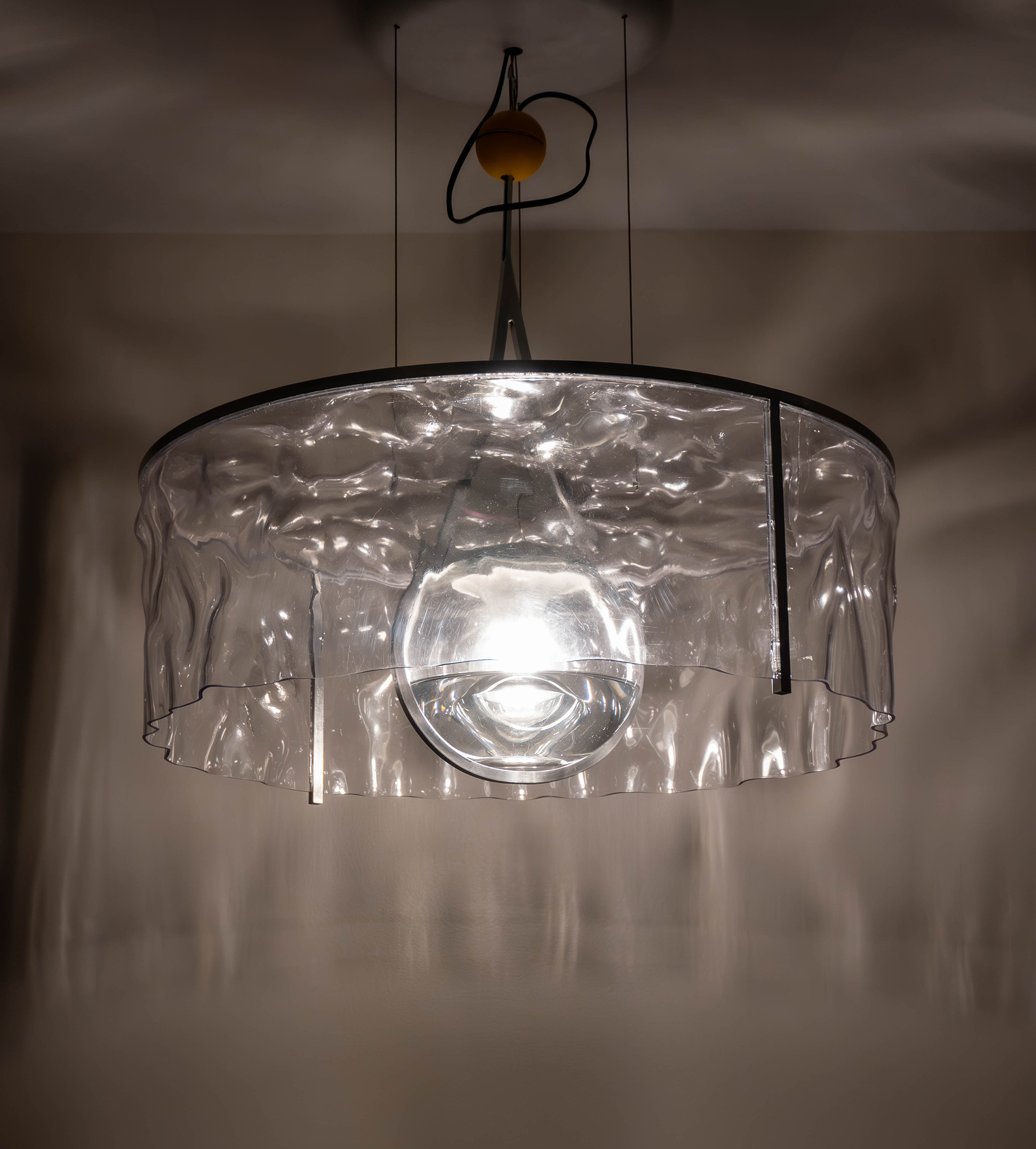
I settled on a central sphere of light mounted to a clear shade with a wave texture molded into it via a pulley system.
The structural frame is aluminum and minimalistic, allowing the silhouette to draw focus
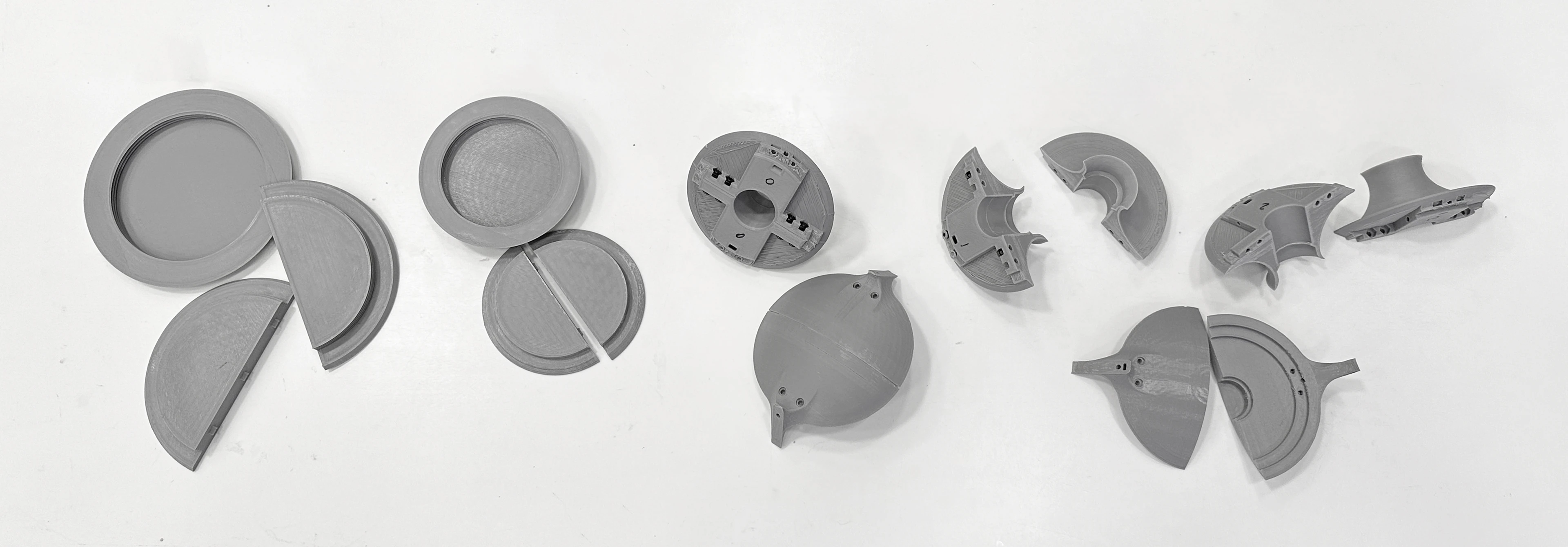
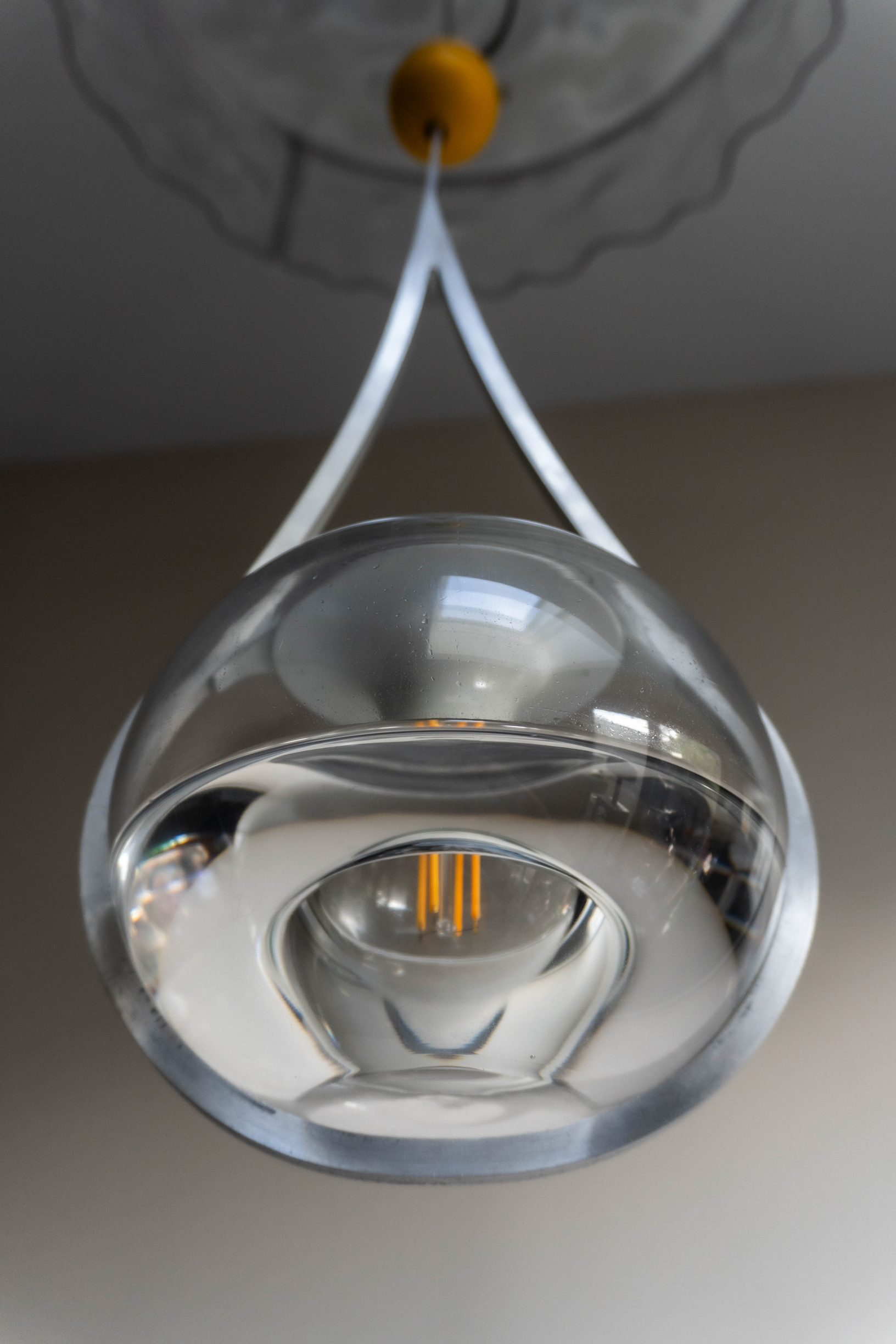
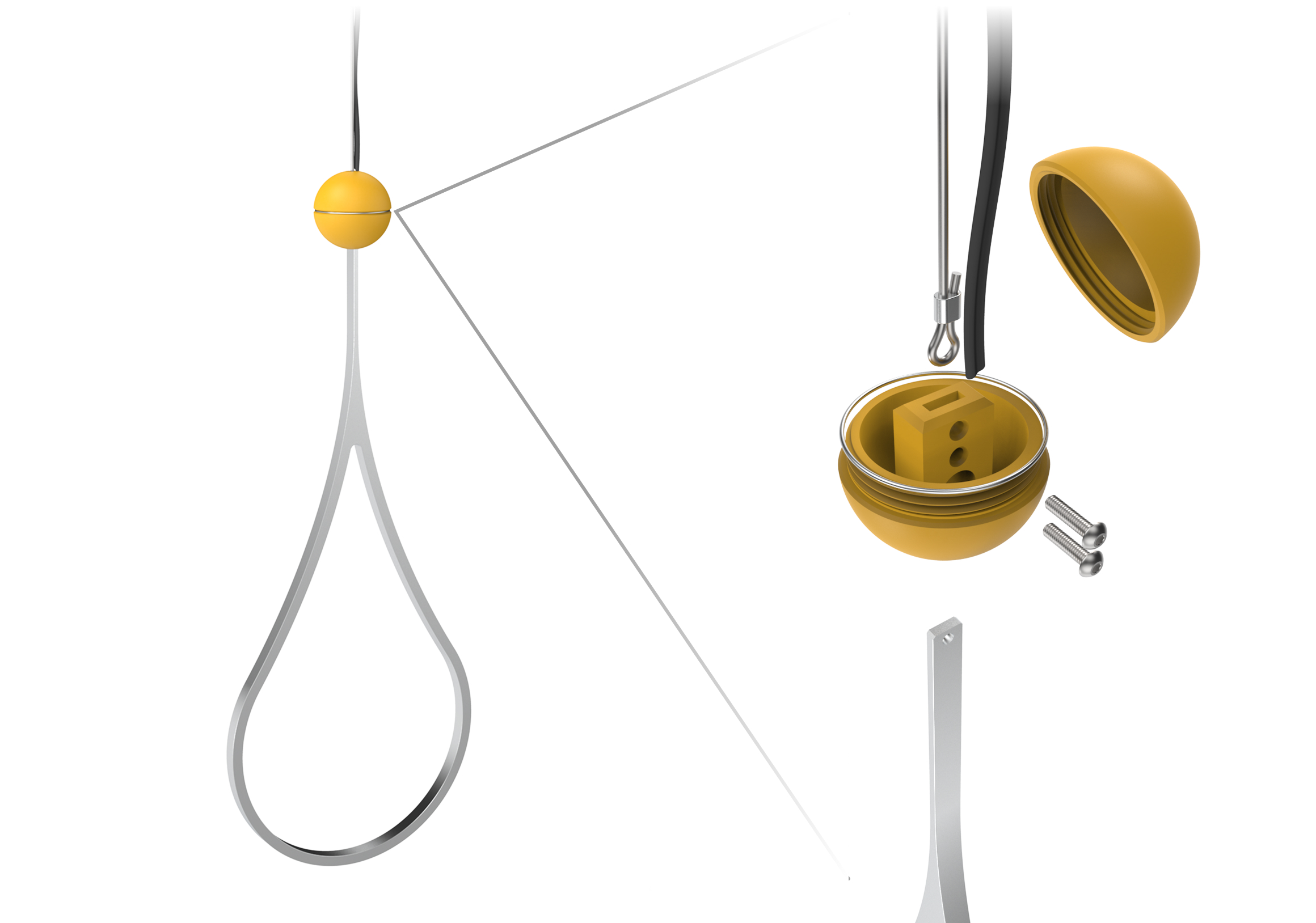
The central mechanism assembles a lightbulb suspended within a glass orb holding mineral oil. It also hides wiring running up the aluminum chassis.

The E26 bulb housing is split into 2 pieces. This allows the socket as well as M3 nuts to be held captive within after assembly.
Four M4 bolts hold the 2 halves of the assembly together.
The parts are assembled in halves within the glass bowl, so that it cannot be removed once inside.
Four M3 bolts are screwed from the top into the captive nuts held within.
The M3 bolts are counterbored below the surface, completely hidden from the viewer’s vantage point below the light.
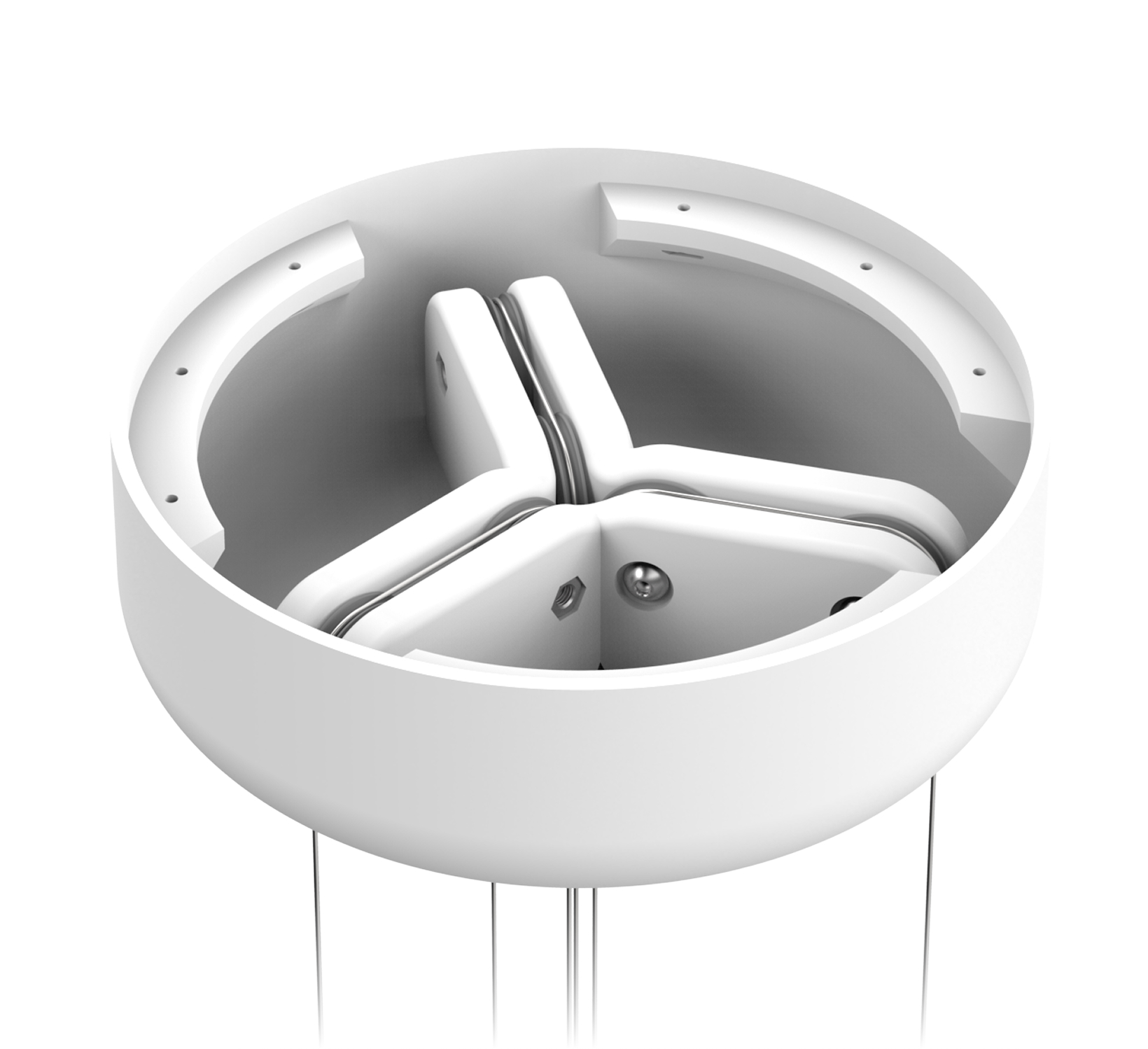
The pulley system is concealed within the ceiling mount, allowing the PETG lampshade and light to move in tandem with one another.
CREST is a hanging pendant-chandelier fusion light with a unique feature: with a single push, the hidden pulley system activates and the entire light morphs, overlapping the shade over the bulb and sending caustic rays of light scattering across the room, creating an intimate and elegant mood.
The light is completed with a liquid filled glass ball that encapsulates the lightbulb, further enhancing the oceanic themes and serene mood that surrounds the user.

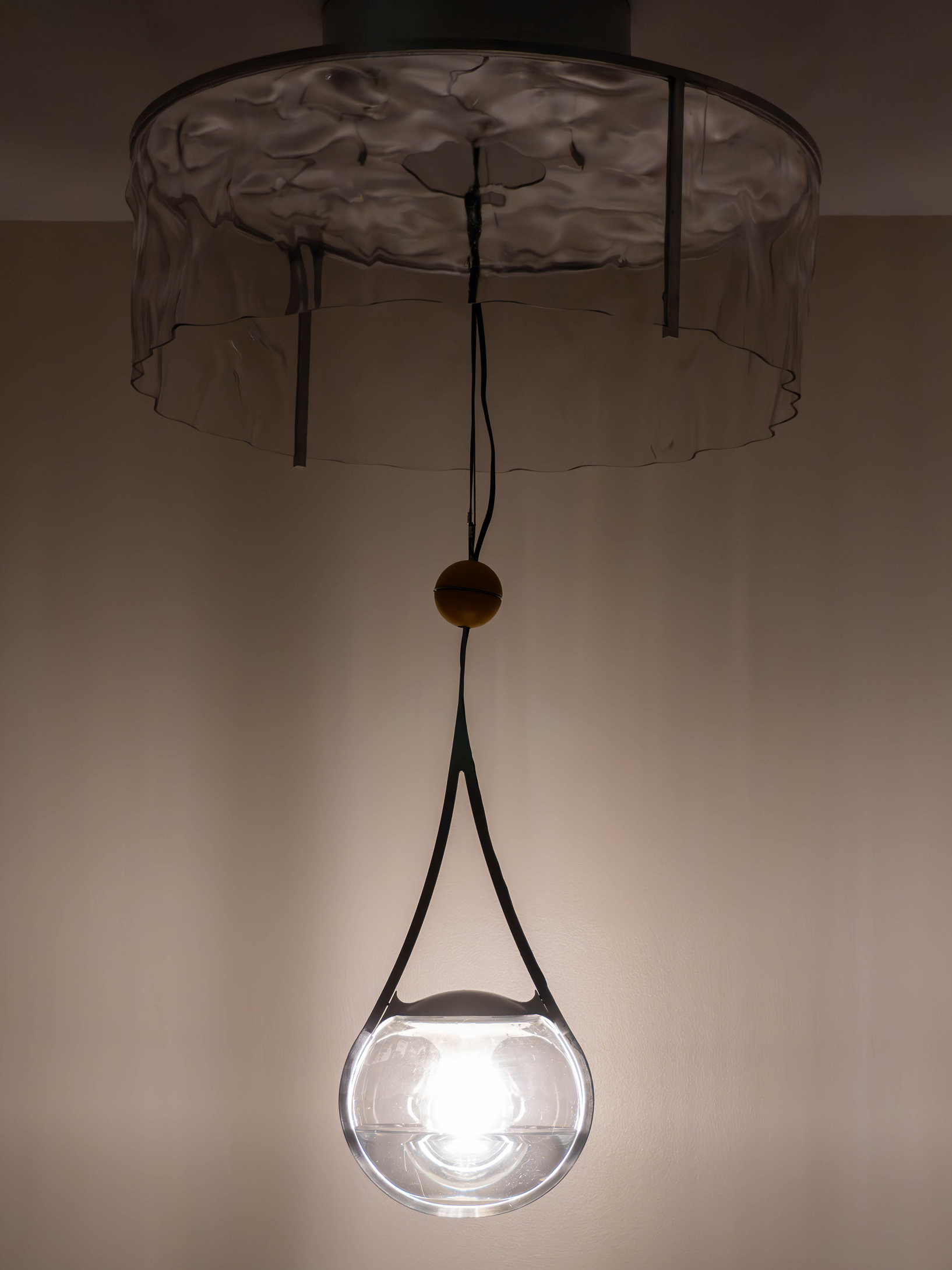
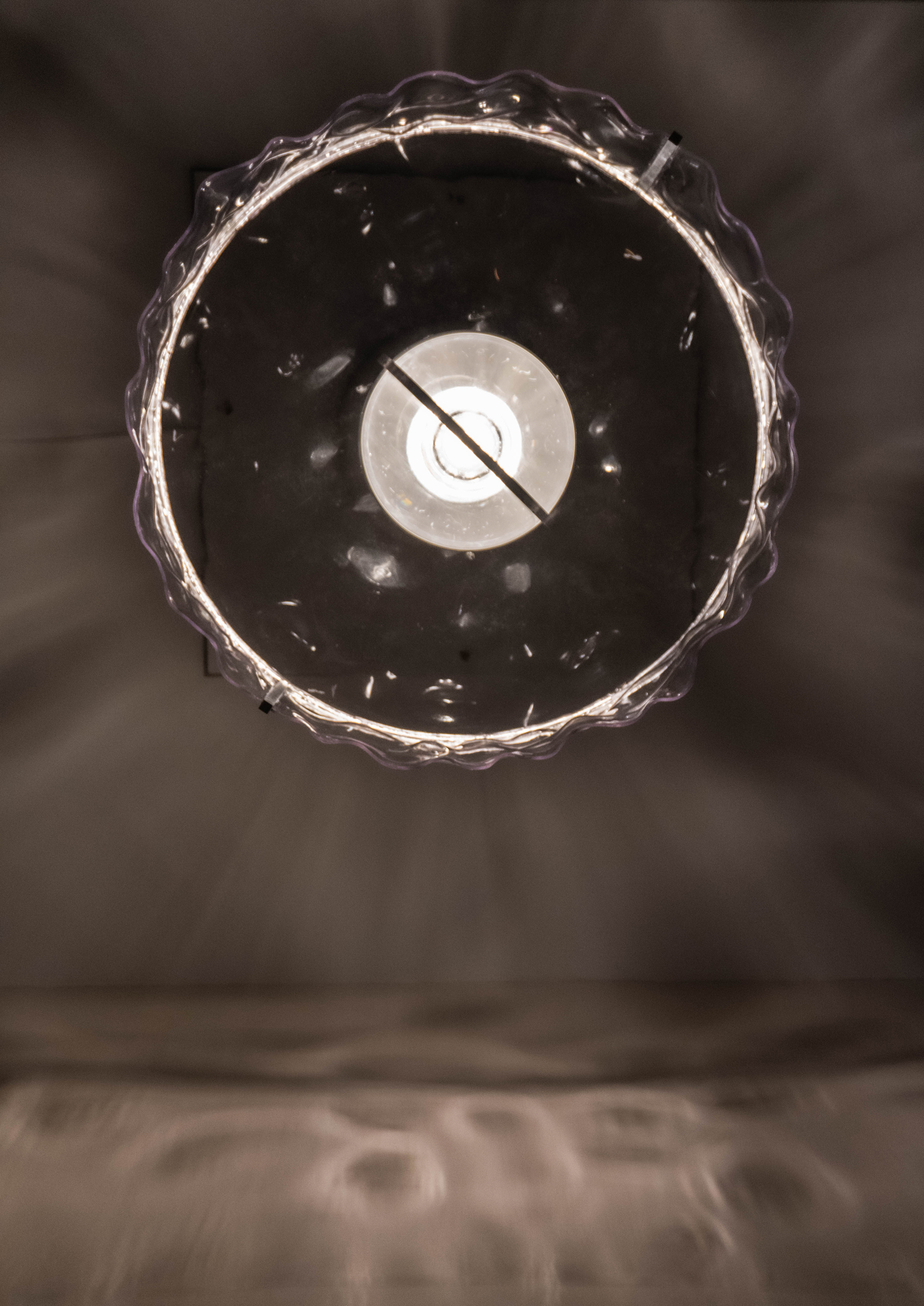
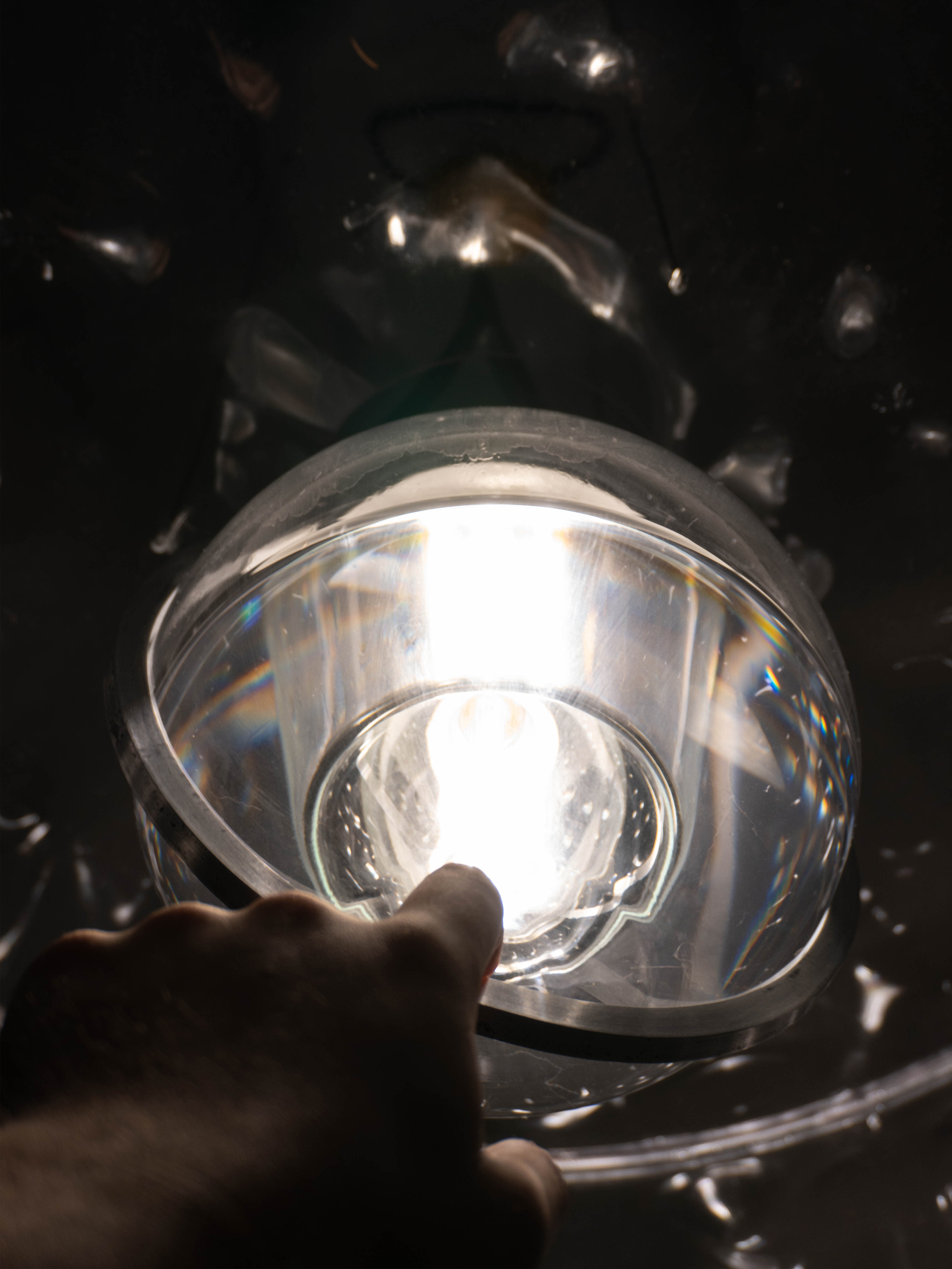
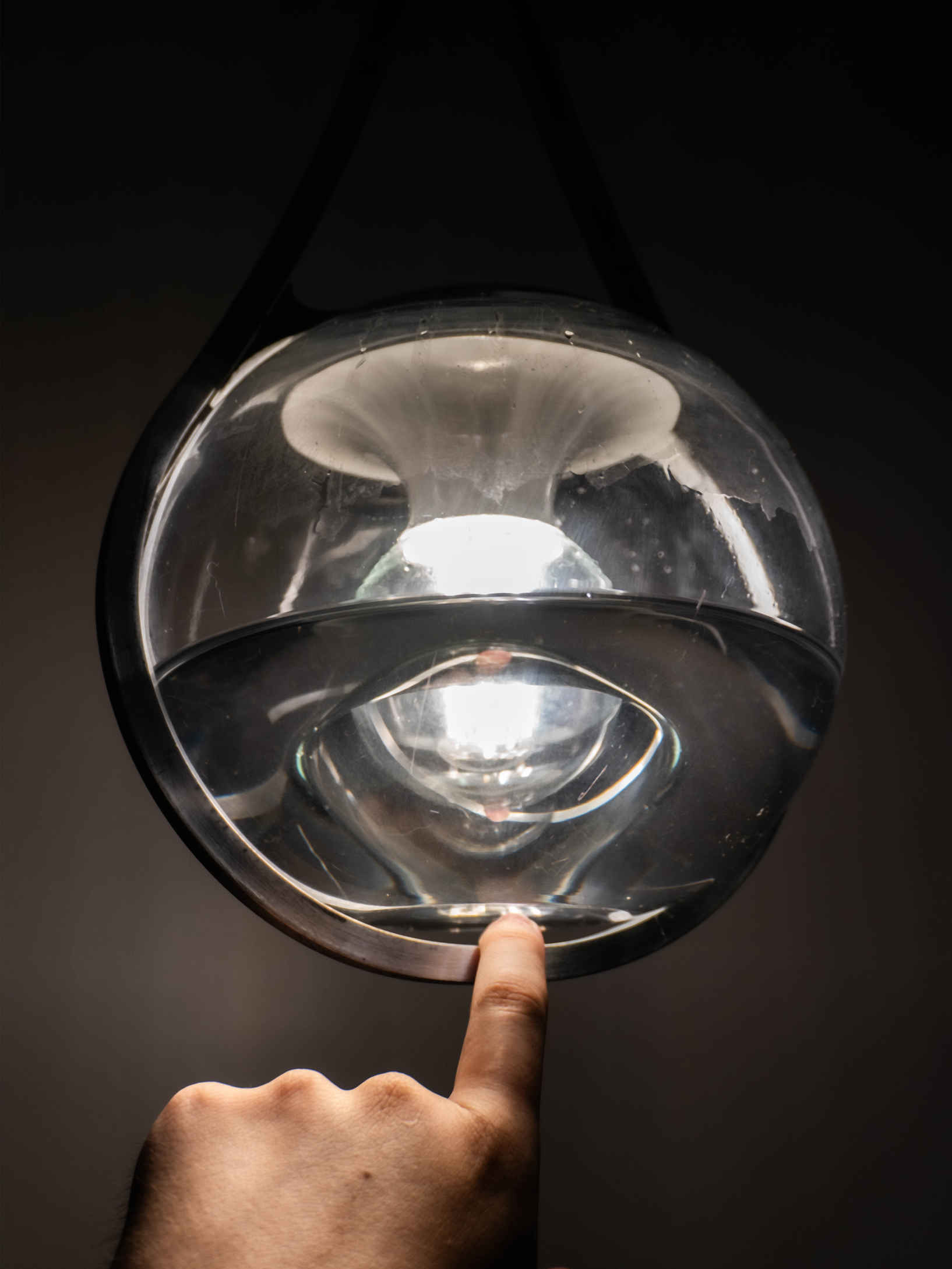
The liquid sealed within the sphere not only plays into the theme of water and calm that are present throughout the design, but also reflect and refract the light in beautiful and dynamic ways.
In addition, the aluminum droplet outline, paired with a cutout in the bottom of the glass, act as a seamless handle in which to push and pull the mechanism and trigger the light’s physical transformation.
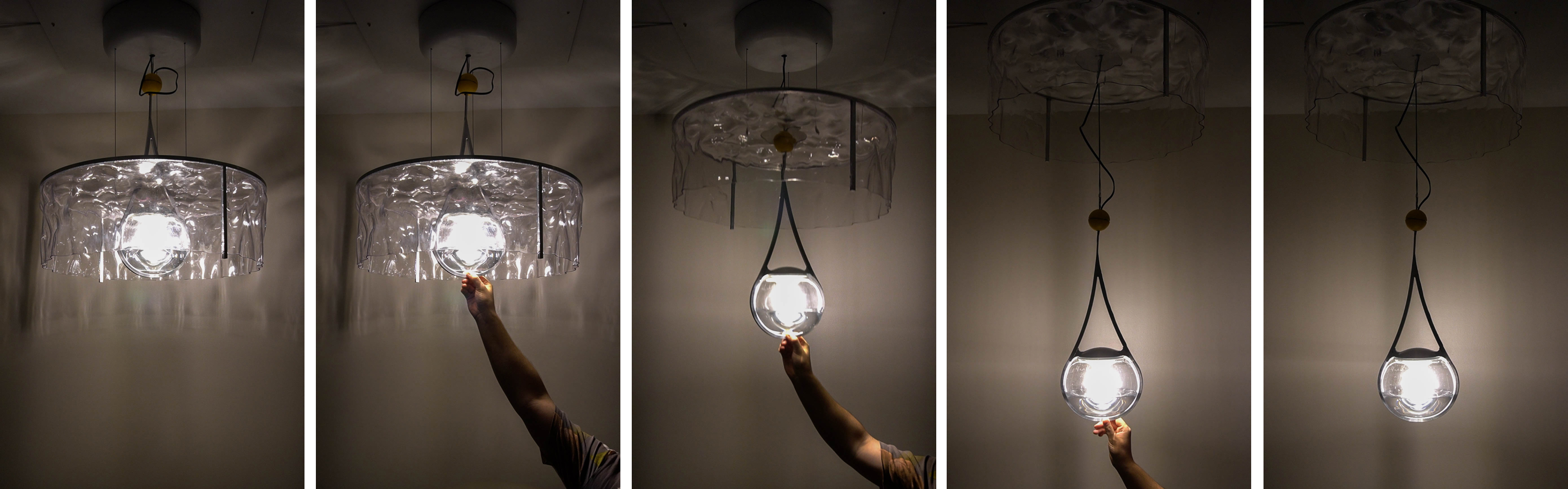
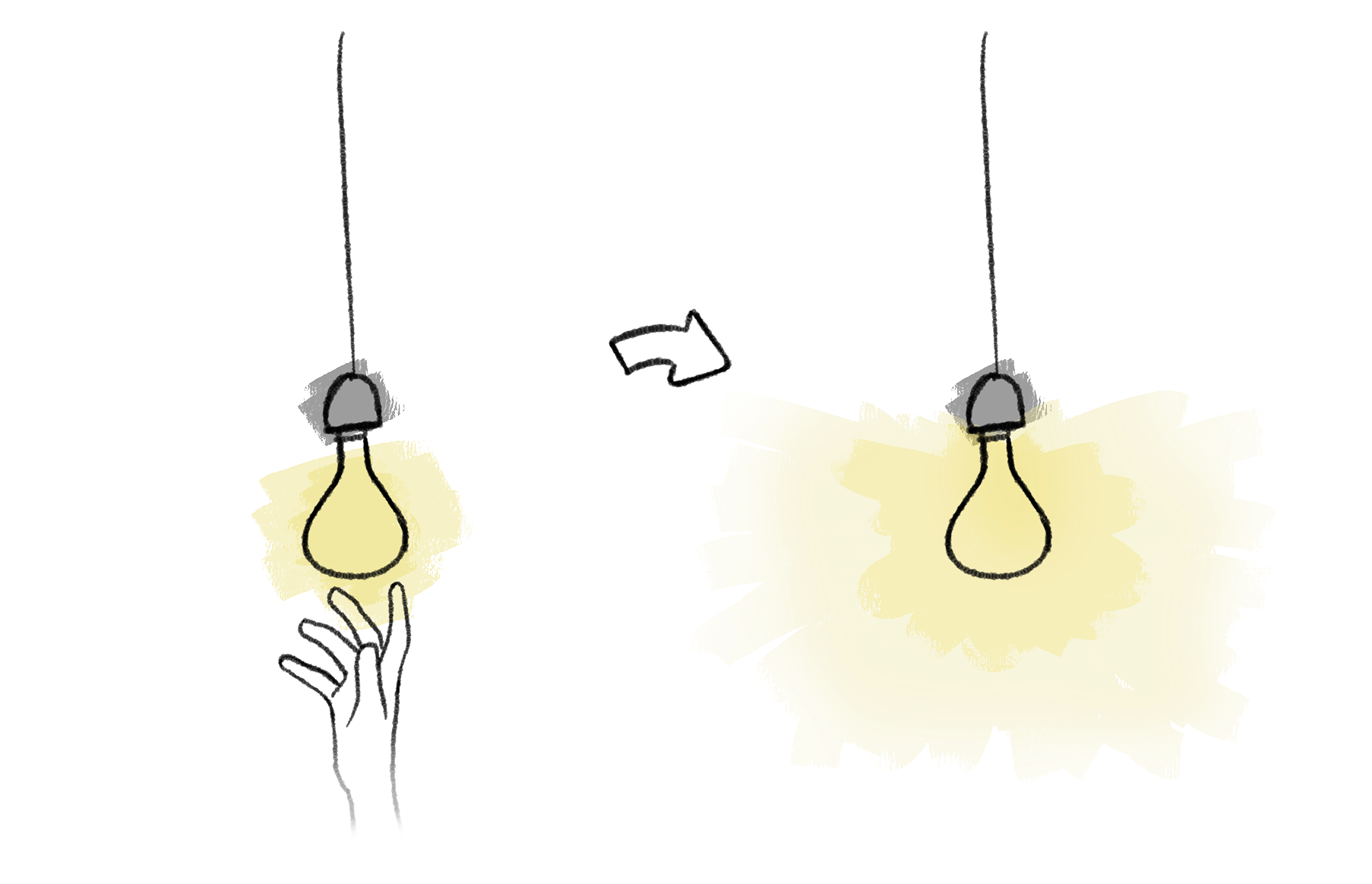
The user interacts with the light by pulling or pushing on a handle under the bulb, in doing so, the hidden pulley system changes the form of the light.
In the top position, the lightbulb and lampshade overlap, sending caustic rays across the room, creating an oceanic atmosphere. In the bottom position, the lightbulb is closer to a table underneath, creating a focused overhead light.
The input, complete transformation, and output are all physical and tactile, instead of being controlled by electronics and switches. This creates a physical connection to the light and the mood that it creates which most overhead lights do not achieve.